
Application of FLUORINATED oil FLUO-OIL 135 Used in Droplet-Based Microfluidics
Fluorinated oils have received increasing interest over the last few years, as applications in the field of microfluidics have largely expanded. Especially, droplet-based microfluidic platforms have successfully been developed for a wide range of applications such as macromolecular engineering, drug screening, digital PCR or cell encapsulation and sorting, to name a few. Droplets are also widely used as microreactors for chemical or biological reactions as they allow running thousands of experiments in parallel while minimizing costs and volumes in a time-effective manner.
For all these applications, the compartmentalization into droplets requires a fluid that is immiscible with water and a surfactant to prevent droplets from merging. By far, the preferred fluids for such applications are fluorocarbon oils. They are inodorous, transparent, and they exhibit great retention of reagents in droplets since most organic compounds are insoluble in fluorinated oils. Additionally, they are biocompatible and permeable to gases allowing passive diffusion of oxygen and carbon dioxide, which is critical for cell viability.
Novec 7500™ fluorinated oil from 3M is one of the most widely used and formulated by Emulseo as Fluo-Oil™ 7500 for specific usage with FluoSurf™ and the other Emulseo’s surfactants. A comparative study by Emulseo on physico-chemical properties and microfluidics performance of Fluo-Oil™ 135 and Novec™ 7500 fluorinated oil is presented.
- Chemical Properties
| NovecTM 7500 | Fluo-Oil 135 | |
| Appearance | Transparent | Transparent |
| Boiling point (Deg C) | 129 | 135 |
| Viscosity (mPa.s) | 1.24 | 1.72 |
| Density (g/ml) | 1.61 | 1.72 |

- Microfluidics Performance
In order to evaluate the impact of switching from Novec™ 7500 to Fluo-Oil™ 135, water-in-oil droplets were generated using both oils. Droplet size distribution, stability through thermocycling and incubation as well as molecular retention were evaluated and compared for both droplet populations. Materials and methods used are as follows:
- A microfluidic polydimethylsiloxane (PDMS)/micrscope glassslide flow-focusing device
- Surface coating of the microfluidic wall with Fluo-ST1™ to ensure surface hydrophobicity
- Dissolving 4wt/wt% neat FluoSurf™ surfactant in either Novec™ 7500 or Fluo-Oil™ 135
- PBS or 100μM fluorescein in PBS
- Syringe pumps used to control the flow rates of the different phases in the microfluidic device
- Inverted microscope and ImageJ for data analysis
- Experimental Results
Droplet generation using both oils results in similar droplet sizes. Monodisperse populations were obtained using both oils and image statistical analysis suggested that the size CV% are 2.3% ad 2.9% for Fluo-Oil™ 135 and Novec™ 7500.

- Droplet Stability
To evaluate the impact of switching oils on droplet stability, water-in-oil droplets were generated, and three different emulsion samples were collected for both oil types. For each sample, a population of about 10000 droplets was statistically analyzed to determine the average droplet size and size coefficient of variation.
- The first one was directly re-injected into a glass observation chamber.
- The second one was submitted to a classical PCR thermocycling process with 30 heating cycles [98°C 10s, 50°C 5s, 72°C 10s] to evaluate droplet thermo-stability.
- The third one was placed in a 37°C incubator for 3 days.

- Molecular Retention Inside Droplets
Droplet-based chemical or biochemical assays rely on the reagents to remain isolated in individual droplets. Leakage to the continuous phase and exchange between droplets, even low, could impact the integrity of the results and therefore, molecular retention is an important parameter to consider when choosing the oil. The image below shows the evolution of the mean fluorescence intensity difference between the two populations (dye-loaded and empty droplets) and associated fluorescence and bright field pictures at initial timepoint and after 48 hours.

More details on this application can be found from this link. Credit of this application note and images belongs to Emulseo.
Aurora Pro Scientific offers high performance Emulseo's surfactants for microfluidics droplet generation. Should you have any questions about our products, please visit our website. Welcome to contact us at sales@auroraprosci.com.

Related Products
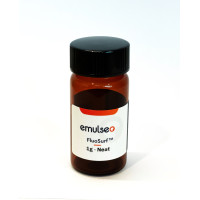
Emulseo FLUOSURF TM Neat Fluorinated Surfactant for Droplet Generation
FluoSurf™ is a biocompatible fluorinated surfactant specifically designed and optimized for producti..
$0.00
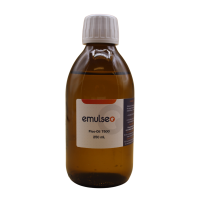
Emulseo FLUO-OIL 7500 for Droplet Generation
The fluorinated oil comprises a polyfluorinated surfactant (<0.1%) solubilized in Novec™ 7500 oil..
$0.00
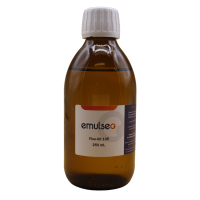
Emulseo FLUO-OIL 135 for Droplet Generation
Fluo-Oil 135 is a fluorinated oil proposed by Emulseo as an alternative to Novec™ 7500 (similar chem..
$0.00
Tags Cell Analysis, Drug Delivery, Reagent Injection, Cell Culture, Point-of-care testing (POCT), In vitro diagnostics (IVD), Droplet Microfluidics