
Application Notes

Empty FPLC Columns: A Technical Guide to Selection, Packing, and Operation
Empty FPLC columns give chromatography users complete control over resin selection, bed geometry, and packing quality — control that pre-packed columns do not offer. Because the hardware is decoupled from the stationary phase, researchers can match a single column format to affinity, ion-exchange, size-exclusion, or mixed-mode media simply by changing the resin. This flexibility makes empty columns the standard choice for method development, resin screening, scale-up studies, and custom purification workflows across academic, biotech, and pharmaceutical laboratories.
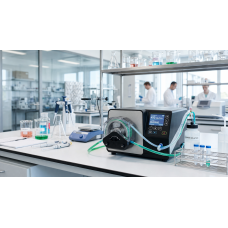
Why Peristaltic Metering Pumps are Essential for Sensitive Laboratory Fluid Handling?
Precision and purity are non-negotiable in the lab. Discover why peristaltic metering pumps are the gold standard for handling sterile reagents and aggressive chemicals without contamination. Learn how this 'seal-less' technology can simplify your fluidics workflow and improve experimental reliability.

Complete Guide to Pump Selection: Professional, Safe, and Reliable Solutions for Corrosive Liquid Handling
Peristaltic pumps have become indispensable across a surprisingly diverse range of industries – from pharmaceutical research and precise laboratory dosing to advanced water treatment and delicate food processing. Their unique ability to move fluids without contamination, coupled with smooth operation, makes them a preferred choice for applications demanding accuracy and sensitive handling. However, for those new to considering these pumps, a key initial question is: how much do they cost? This guide, updated for 2025, delves into the factors influencing peristaltic pump pricing, providing a detailed breakdown and actionable advice for making the best investment for your specific needs. We’ll explore initial costs, ongoing expenses, and how they compare to other pumping technologies.
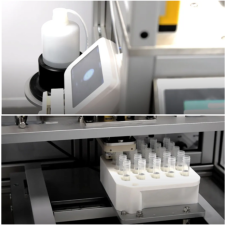
Choosing the Right Peristaltic Pump: A Comprehensive Guide to Costs and Considerations (2025)
Peristaltic pumps have become indispensable across a surprisingly diverse range of industries – from pharmaceutical research and precise laboratory dosing to advanced water treatment and delicate food processing. Their unique ability to move fluids without contamination, coupled with smooth operation, makes them a preferred choice for applications demanding accuracy and sensitive handling. However, for those new to considering these pumps, a key initial question is: how much do they cost? This guide, updated for 2025, delves into the factors influencing peristaltic pump pricing, providing a detailed breakdown and actionable advice for making the best investment for your specific needs. We’ll explore initial costs, ongoing expenses, and how they compare to other pumping technologies.
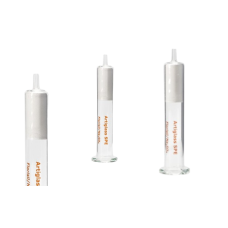
Solid Phase Extraction (SPE): Principles, Applications, and Advancements
Solid Phase Extraction (SPE) is a widely used sample preparation technique in analytical chemistry, particularly in chromatography. It enhances the accuracy and sensitivity of analytical methods by isolating and concentrating analytes from complex matrices. SPE is commonly employed in environmental, pharmaceutical, forensic, and food safety applications.
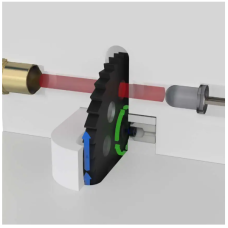
Introduction of Microturbine Flow Meter
A microturbine flow meter operates based on a rotating turbine positioned within the flow path. As fluid passes through the meter, it causes the turbine blades to spin at a speed proportional to the velocity of the fluid. A sensor detects the rotational speed, typically using a magnetic pickup or optical sensor, and converts it into an electrical signal. This signal is then processed to determine the flow rate.
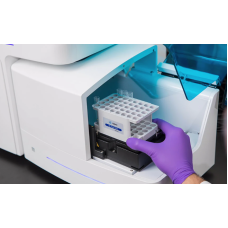
Overview of Fluidics System in Flow Cytometry
Flow cytometry is a laser-based technology that rapidly analyzes cells (or particles) from a fluid sample to obtain precise information about their physical and chemical characteristics. The technique involves labeling cells with fluorescent markers and passing them one by one through a laser (or multiple lasers) while suspended in solution [1]. The interaction between cell and laser beam produces both scattering and fluorescent light signals that are received by a detector, converted into electrical signals, then analyzed by a computer to ascertain cellular information [2]. One of the key principles of flow cytometry is that it is a high-throughput method, meaning that it can analyze thousands or even millions of particles per second.

Transmission Measurements Part I: NIR OR VIS-NIR TRANSMISSION SPECTROSCOPY
Transmission spectroscopy is a widespread analysis technique that consists in measuring the absorption produced by a given sample when a beam of infrared light goes through them. Transmission spectroscopy applies mostly to liquids and gases, yet pressed powders or thin-films might also be characterized using this methodology. Besides spectroscopic measurements, transmission measurements are also useful to evaluate the properties of optical components, such as windows and filters. Arcoptix offers many solutions to perform transmission spectroscopy that rely either on our FT NIR or MIR FTIR instruments.
Transmission Measurements Part II: MIR TRANSMISSION SPECTROSCOPY
Transmission spectroscopy is a widespread analysis technique that consists in measuring the absorption produced by a given sample when a beam of infrared light goes through them. Transmission spectroscopy applies mostly to liquids and gases, yet pressed powders or thin-films might also be characterized using this methodology. Besides spectroscopic measurements, transmission measurements are also useful to evaluate the properties of optical components, such as windows and filters. Arcoptix offers many solutions to perform transmission spectroscopy that rely either on our FT NIR or MIR FTIR instruments.

Case Study: Optimizing Fermentation with Precise Fluid Management
A biopharmaceutical company faced challenges in their fermentation processes, primarily focusing on maintaining precise control over fluid handling, ensuring consistency, and enhancing efficiency to boost harvest yield while minimizing waste. Precise delivery of five critical fluids—growth media, acids, bases, and anti-foam agents—was essential to prevent dosing errors that could disrupt the fermentation process and affect product quality.