
Approaches to reduce flow pulsation on peristaltic pumps and principles
Peristaltic pumps inherit with flow pulsation as a natural result of the way in which the pump operates by compressing the tubing. There are several approaches that can be used to reduce flow pulsation in peristaltic pumps. The principles behind these approaches to reducing flow pulsation in peristaltic pumps involve minimizing the amount of disruption to the flow of the fluid and allowing the fluid to pass through the pump smoothly and evenly. A few commonly used methods are discussed herein:
- Increase the number of rollers: By increasing the number of rollers in the pump, the flow pulsation can be reduced because the fluid is being displaced more frequently. Take the DG15 series pump head as an example. DG15-24 with two channels has 4 rollers and can generate flow rate as high as 1800 mL/min while the DG15-48 and DG15-28 have 8 rollers which can generate smooth and less pulsatile flow. However, the flow rate is less than the DG15-24 pump head. The max flow rate of DG15-28 and -48 is about 75mL/min. Thus, it's a tradeoff when selecting high flow pump and pumps with smooth flow.
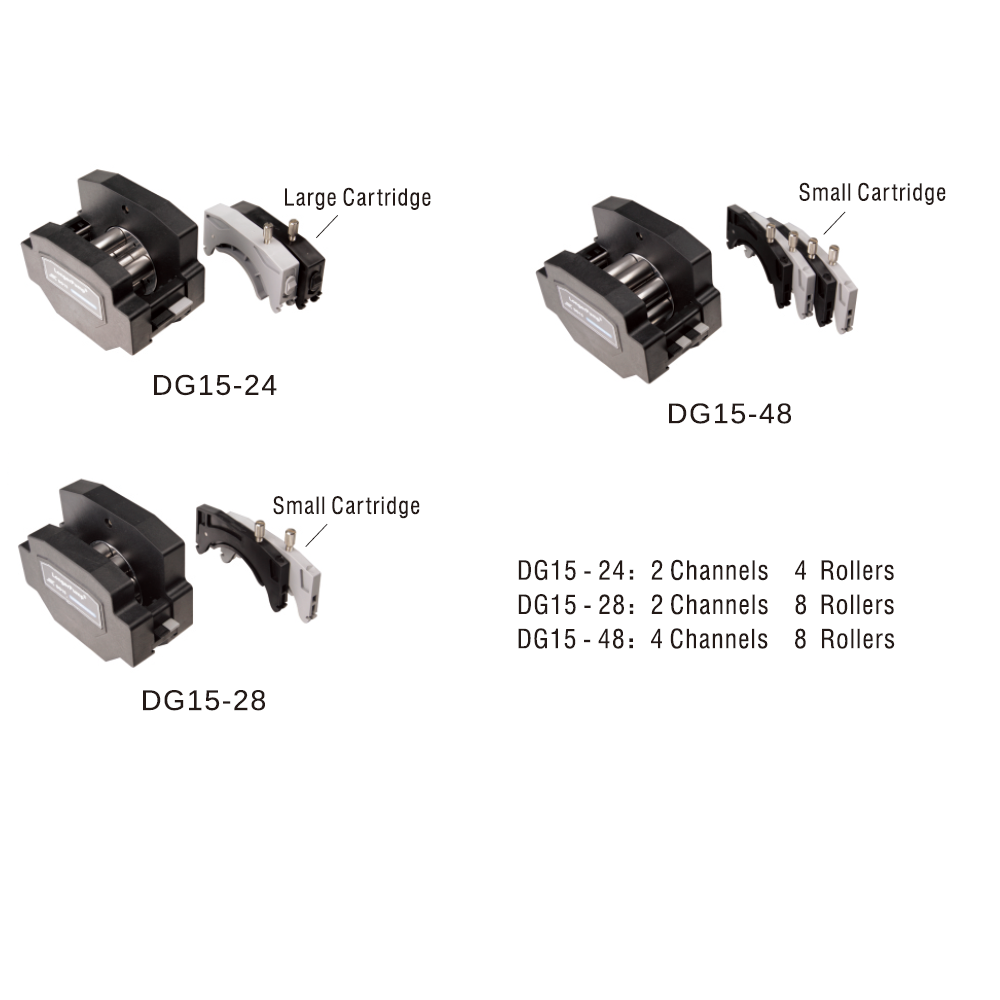
Fig 1. DG15 series pump heads with 4 or 8 rollers
- Use a high-compliance tubing: Using a tubing with high compliance (i.e. flexibility) can help to reduce flow pulsation because it can absorb some of the pressure fluctuations that are generated by the rollers. A long and flexible tubing introduced helps to reduce flow pulsation because it can absorb some of the pressure fluctuations that are generated by the rollers.
- Implement active control systems. These systems use sensors and control valves to actively adjust the flow in rea-time to eliminate flow pulsation. For example, install flow meters inline with peristaltic pumps. These devices can measure the flow rate and provide feedback to control systems, allowing for more precise control of flow. A variety of flow meters with different working mechanisms, including variable area flow meters, differential pressure, turbine, paddle-wheel sensors and ultrasonic can be found here: https://www.auroraprosci.com/fluid-handling/Flow-Meters
- Use flow-modifying components: These components, such as orifices, nozzles, and flow straighteners can be used to change the flow characteristics and smooth out the flow.
- Use a pulsation dampener: A pulsation dampener is a device that is placed inline with the pump and hose, and it acts to absorb the shock of the fluid being displaced and smooth out the pulsations in the flow. One example of flow dampener is illustrated below.

Fig 2. Example of internal structure of a typical flow damper
- Special pump head with a phase compensation mechanism that drives two channels alternatively. A special tubing (see image below) is split into two channels on inlet of the pump head and the rollers squeeze the fluid through the tubing in the pump head, where after it flows into one channel again. The two channels operate 180 degree out of phase to eliminate flow pulsation. This pump head is suitable for flow rates application. For example DMD-15 pump head can generate flow ranging from 80 mL/min to 2070 mL/min with different tubing IDs.

Fig 3. Schematic of DMD-15 phase compensation mechanism to eliminate flow pulsation
If you have any questions or need assistance to reduce the flow pulsation in your peristaltic pumping systems, please feel free to reach out to us at sales at auroraprosci dot com!

Related Articles

Peristaltic Pump Tubing Selection Guide
Peristaltic pumps are typically used to pump sterile or aggressive fluids without exposing those fluids to contamination from exposed pump components. They are self-priming, reversible and highly reliable. Also, peristaltic pumps are suitable for applications where isolation of the product from environment is critical, such as pumping abrasives, corrosive or/and viscous fluids. There are a wide variety of applications of peristaltic pumps listed but not limited: Medicine: Dialysis machine/medical infusion pumps, blood transfusion ; Testing and research: Auto-analyzer , analytical chemistry experiments, media dispensers; Chemical handling: Pharmaceutical production, dosing systems etc.

Peristaltic Metering Pump Types and Their Working Modes
One of the key advantages of peristaltic pumps is their ability to handle delicate and viscous fluids without damaging them. Unlike other types of pumps, the flexible tubing used in peristaltic pumps does not come into contact with the fluid, which means that there is no risk of the fluid being damaged or contaminated. Peristaltic pumps are also known for their reliability and durability. They are simple in design and have few moving parts, which means that they require minimal maintenance and have a long lifespan. They are also able to operate in a wide range of temperatures and environments, making them suitable for use in a variety of industries.

High Protection Metering Pumps: The Ultimate Solution for Waterproof Applications
In industrial settings, the need for reliable and durable equipment is paramount. Aurora ProSci's range of high protection metering pumps, including the HP300, HP350, HPM350, and HPM150 series, exemplify cutting-edge technology designed to thrive in the harshest environments. These pumps feature robust construction, IP67 waterproof and dustproof ratings, and advanced control mechanisms, ensuring consistent performance and longevity.

Diaphragm Pumps vs. Peristaltic Metering Pumps
Pumps play a crucial role in various industries, from chemical processing to pharmaceuticals, food and beverage production, and water treatment. Two common types of metering pumps used in these applications are diaphragm pumps and peristaltic pumps. While both serve the purpose of moving fluids with precision, they operate on different principles and offer distinct advantages and disadvantages. This article will delve into the key differences between diaphragm pumps and peristaltic metering pumps, including their use in medical applications.
Emerging Research Topics and Trends in the Peristaltic Pump Industry
Peristaltic pumps, known for their precision and versatility, play a crucial role in a wide range of industries, from pharmaceuticals to wastewater treatment. The peristaltic pump industry is currently focusing on several key efforts and hot topics. These trends reflect the industry's commitment to innovation, efficiency, and adaptability to meet evolving demands: Advancements in Materials: There's a significant push towards developing more durable and chemically resistant tubing materials. This is crucial for extending the lifespan of pumps and ensuring they can handle a wider range of fluids, including highly corrosive or viscous substances.
Related Products
Peristaltic Pump Head, Low Flow Pulsation, Flow Rate ≤2027 mL/min -DMD15-13-B
The DMD15-13-B pump head is designed for high precision and small volume dispensing applications. Th..
$313.00

KNF FPD 06 Flow Pulsation Damper
The flow pulsation damper consists of a fluid chamber and a diaphragm. A diaphragm separates t..
$179.90
Ultrasonic Flowmeter ASP-D116, Cost-Effective and Measurement Accuracy: ±1.0%
ASP-D116 ultrasonic flowmeter is based on a state-of-the-art transit time or time of flight design u..
$1,059.99
Tags Peristaltic pump, Microfluidic, Metering Pump, Sample Preparation, Dispensing and filling, Flowmeter, Flow Damper, Flow Control