
Background Introduction to the Role of Peristaltic Pumps in Spectrometers and Spectroscopy
Spectrometers and spectroscopy represent pivotal tools in analytical chemistry, offering insights into the composition, structure, and properties of substances through the interaction of matter with electromagnetic radiation. These techniques have found applications across diverse scientific disciplines, including chemistry, physics, biology, medicine, and environmental science. The accuracy and reliability of data obtained through spectrometric analyses depend not only on the sensitivity of the instruments but also on precise fluid handling during the analytical process.
Principles of Spectroscopy: Spectroscopy, at its core, involves the study of how matter interacts with electromagnetic radiation. By examining the resulting spectra—whether absorption, emission, or scattering—scientists gain valuable information about the molecular and atomic composition of substances. The diverse techniques within spectroscopy, such as UV-Visible, infrared, nuclear magnetic resonance (NMR), and mass spectrometry, each focus on specific aspects of this interaction, offering a comprehensive toolkit for analytical investigations.
Importance of Fluid Handling in Spectroscopy: Many spectroscopic analyses involve the handling and introduction of liquid samples or reagents. The precision and accuracy of these fluid-handling processes are paramount for obtaining reliable and reproducible results. Peristaltic pumps, with their unique mechanism of squeezing and releasing flexible tubing to move fluids without direct contact, play a crucial role in ensuring controlled and pulsation-free fluid delivery. They mainly work in two modes: continuously deliver samples or reagents with constant flow rate; intermittently inject certain volumes of samples or reagent. The following gives an overview of how the peristaltic pumps used in spectroscopy.
Applications of Peristaltic Pumps in Spectroscopy:
- Sample Introduction in Inductively Coupled Plasma (ICP) Spectrometry:
- Significance: Controlled and consistent sample introduction is essential for accurate ICP spectrometric analyses. Peristaltic pumps ensure precise delivery of liquid samples into the nebulizer, contributing to the reproducibility of results.
- Flow Injection Analysis (FIA) Systems:
- Significance: In FIA systems, where rapid and automated analyses are conducted, peristaltic pumps control the flow of samples and reagents. Their role is crucial in achieving uniform mixing and accurate injection, enhancing the efficiency of the analytical process.
- Liquid Chromatography (LC) and High-Performance Liquid Chromatography (HPLC):
- Significance: Peristaltic pumps are fundamental in chromatography, where precise and pulsation-free fluid delivery is essential for achieving accurate and reproducible separations.
- Nuclear Magnetic Resonance (NMR) Spectroscopy:
- Significance: NMR spectroscopy often involves the continuous flow of samples through the NMR probe. Peristaltic pumps contribute to this process by ensuring a consistent and controlled sample flow.
- Sample Dilution and Injection in UV-Vis Spectrophotometry:
- Significance: For accurate measurements in UV-Vis spectrophotometry, peristaltic pumps are used to precisely handle sample dilution and injection, minimizing errors in absorbance or transmittance readings.
- Automated Sample Handling in Mass Spectrometry:
- Significance: Peristaltic pumps play a vital role in automated sample introduction systems for mass spectrometry, contributing to the accuracy and precision of ionization processes.
In summary, peristaltic pumps serve as indispensable components in the fluid-handling aspect of spectrometers and spectroscopy, ensuring the reliability and accuracy of analytical measurements across a spectrum of scientific applications. Their ability to provide controlled, pulsation-free fluid delivery makes them essential for maintaining the integrity of spectroscopic analyses. If you have any questions or need assistance to integrate peristaltic pumps in your spectrometer, please feel free to speak to one of product specialists.

Related Articles

Peristaltic Pump Tubing Selection Guide
Peristaltic pumps are typically used to pump sterile or aggressive fluids without exposing those fluids to contamination from exposed pump components. They are self-priming, reversible and highly reliable. Also, peristaltic pumps are suitable for applications where isolation of the product from environment is critical, such as pumping abrasives, corrosive or/and viscous fluids. There are a wide variety of applications of peristaltic pumps listed but not limited: Medicine: Dialysis machine/medical infusion pumps, blood transfusion ; Testing and research: Auto-analyzer , analytical chemistry experiments, media dispensers; Chemical handling: Pharmaceutical production, dosing systems etc.

How to Calibrate the Flow Rate of a Peristaltic Metering Pump?
For a specific ID tubing with a certain length, the flow rate of peristaltic pump is proportional to the pump drive speed (RPM) within the linear region of its operation. The actual flow of a peristaltic pump depends on many factors, such as the fluidics properties (viscosity), the way the tubing installation, system hydraulic resistance (fitting, tubing flow resistance), the tubing stiffness and operation time as well fluid temperature. These factors cannot be accounted during factory testing and calibration. The flow rate even changes a little bit after tubing burn-in (first 1-2 hours operation). One can easily notice that the flow rate of a peristaltic pump gets attenuated. Calibrating a peristaltic pump becomes necessarily to ensure accurate dispensing of liquids. The steps can vary based on the specific model and features of your peristaltic pump, but here are general guidelines for calibrating a peristaltic pump with a calibration function.

Peristaltic Metering Pump Types and Their Working Modes
One of the key advantages of peristaltic pumps is their ability to handle delicate and viscous fluids without damaging them. Unlike other types of pumps, the flexible tubing used in peristaltic pumps does not come into contact with the fluid, which means that there is no risk of the fluid being damaged or contaminated. Peristaltic pumps are also known for their reliability and durability. They are simple in design and have few moving parts, which means that they require minimal maintenance and have a long lifespan. They are also able to operate in a wide range of temperatures and environments, making them suitable for use in a variety of industries.
Related Products
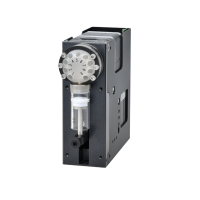
Industrial Syringe Pump ASP-SY01 Integrated with Electrical Rotary Valve, Max Stroke 30 mm
ASP-SY-01 is a compact OEM pump module designed to handle precision liquid handling application. The..
$0.00
-200x200.jpg "Intelligent Laboratory Peristaltic Pump LabF1 Plus (1-150RPM), Dispensing Type, Flow Rate 0.053-775mL/min, LCD Touch Screen")
Intelligent Laboratory Peristaltic Pump LabF1 Plus (1-150RPM), Dispensing Type, Flow Rate 0.053-775mL/min, LCD Touch Screen
This dispensing peristaltic pump can generate 0.01 -9999.99 mL dispensing volumes at adjustable..
$978.00

Intelligent Laboratory Peristaltic Pump IdentiFlo®, Compact Size with 4 Independent Control Channels, 5Inch Touchscreen
This intelligent laboratory peristaltic pump IdentiFlo® features compact size, 5-inch touchscreen an..
$1,299.98
Tags Sample Preparation, Drug Delivery, Reagent Injection, Spectroscopy, Spectrometer