
Commonly Asked Questions for Turbine Flow Meters
Turbine flow meters are essential instruments in various industries for measuring the flow rates of liquids and gases. Known for their high accuracy, reliability, and versatility, these meters are widely used in sectors such as water treatment, oil and gas, and chemical processing. This article addresses some of the most commonly asked questions about turbine flow meters, providing insights into their operation, applications, advantages, limitations, and maintenance requirements. Whether you're new to turbine flow meters or looking to deepen your understanding, this guide offers valuable information to help you make informed decisions.
1. What is a turbine flow meter?
A turbine flow meter measures the flow rate of liquids and gases using a rotor with blades that spin in proportion to the flow velocity.
2. How does a turbine flow meter work?
A turbine flow meter works by fluid flowing through the meter, causing the rotor with attached blades to spin. The rotational speed of the rotor is proportional to the fluid's velocity. As the rotor turns, it generates electrical pulses through sensors (magnetic or optical), which count the rotations. These pulses are then converted into a flow rate by the meter's electronics. This method ensures high accuracy and repeatability, with the frequency of the pulses directly correlating to the flow rate.
3. What are the applications of turbine flow meters?
These meters are widely used in industries such as water treatment, oil and gas, chemical processing, and aerospace for measuring the flow of liquids and gases.
4. What is the dynamic range of turbine flow meters?
The dynamic range of a turbine flow meter refers to the range of flow rates over which the meter can accurately measure. Typically, turbine flow meters have a dynamic range of 10:1 or greater. This means they can accurately measure flow rates from 10% to 100% of their maximum capacity. Some high-performance turbine flow meters can have even wider dynamic ranges, making them suitable for applications with varying flow conditions. For example, the McMillan 101 flowmeter can be configured a max. flow rate of 200 mL/min. The low-end flow measurement is about 20 mL/min. Lower than 20 mL/min, the measurement accuracy cannot be guaranteed unless there is a special configuration.
5. What are the advantages of turbine flow meters?
- High accuracy: Typically within ±0.5% of the reading.
- McMillan 10X series feature a standard ±1.0% Full Scale; Improved ±0.5% Full Scale.
- GF Signet 2000 series feature a standard ±1.2% Full Scale.
- Wide range of sizes: Suitable for small to large pipe diameters.
- McMillan 10X series: Max. flow meter: 50 Liter/min
- McMillan S-Series: Min. flow rate: 13 mL/min
- Good repeatability: Ensures consistent performance.
- Low pressure drop: Minimal impact on the system's pressure.
- Suitable for both gas and liquid applications.
6. What are the limitations of turbine flow meters?
- Sensitivity to flow profile: Requires a stable, well-developed flow profile for accurate measurements.
- Not suitable for highly viscous fluids: High viscosity can impede the rotor's movement and cause measurement errors.
- Maintenance requirements: Moving parts may require regular maintenance. Frequent calibration is needed to ensure its accuracy.
7. How do you install a turbine flow meter?
Proper installation is crucial for accuracy. Ensure that:
- The meter is installed in a straight section of the pipe with sufficient upstream and downstream straight lengths.
- The flow direction matches the meter's specified direction.
- There is minimal vibration and turbulence.
8. What maintenance is required for turbine flow meters?
Regular maintenance includes checking for debris, inspecting and cleaning the rotor, and ensuring sensors and electronics are functioning correctly.
9. Can turbine flow meters be used with all fluids?
They are best suited for clean, low-viscosity fluids. Abrasive or highly viscous fluids can damage the rotor and affect performance.
10 What are the typical outputs of a turbine flow meter?
Outputs usually include a frequency signal proportional to the flow rate, which can be converted to digital or analog signals for various monitoring and control systems.
11. How do turbine flow meters compare with other types of flow meters?
- Versus Coriolis meters: Turbine meters are less expensive but may not handle viscous or dirty fluids as well.
- Versus ultrasonic meters: Turbine meters are typically more accurate for clean fluids but can have higher maintenance needs.
- Versus thermal meters: Turbine meters have much larger flow measurement range.
Conclusion
Turbine flow meters are reliable, accurate, and versatile tools for measuring fluid flow in various industrial applications. Understanding their operation, advantages, and limitations helps ensure optimal selection and use in specific environments. For further details or specific queries, consult the manufacturer's guidelines or speak to our product specialist.

Related Articles
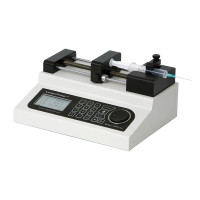
Syringe Pump Flow Rate Calculation
This digital syringe pump (dLSP500) is designed for precision fluid handling laboratory applications. It accepts syringe size from 0.5uL to 60mL. Let's consider the dLSP500 syringe pump to estimate the flow rate range. This pump has a linear translation speed range of 0.0833mm/min to 180mm/min, with a resolution of 0.03255µm/µstep. Table 1, 2, and 3 list commonly used syringe sizes and their inner diameters. The inner diameter of a 5 mL BD plastic syringe is approximately 11.98 mm. Using this information, we can calculate that the flow rate of the syringe pump ranges from 9.389 µL/min to 20.289 mL/min. The flow rates for other syringe sizes can be calculated in a similar manner. In addition, the average pressures for any syringe pump and syringe together can be estimated by dividing the average force applied on the syringe pump and the syringe surface area.
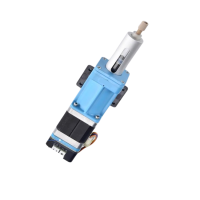
Industrial Syringe Pump Communication Command Examples (Hexagon Codes)
The ASP-SY0825 is a compact OEM industrial syringe pump module designed for precision liquid handling applications. This new syringe pump can communicate through RS-232, RS-485, or CAN interfaces, allowing for multi-pump arrangements of up to 15 pumps in one group. It supports group control and individual addressing, making it versatile for various automation needs. This pump is ideal for tasks such as auto pipetting, sample dilution or mixing, and sample dispensing in analytical instruments. It is available in three volume options: 5 mL, 12.5 mL, and 25 mL. If you have any questions or require more details, please don't hesitate to reach out to our product specialist.

Practical Fluidic Interface Guide for Electric Rotary Valves in Laboratory Automation
The electric rotary or multi-channel switching valve is a stepper motor-driven fluid handling valve designed for automated fluidics applications. This precise rotary valve automates the routing of fluidic volumes, allowing for the handling of aggressive fluids and switching flow directions as needed. For instance, in a multi-channel distribution valve, a common central port connects the stator and rotator, enabling the switching of flow direction between different ports with a rapid response time of less than 120ms for adjacent ports. This switching valve can communicate through RS-232, RS-485, or CAN interfaces, allowing for multi-valve arrangements of up to 15 valves in one group. See Figure 1 for the wiring instruction. It supports group control and individual addressing, making it versatile for various automation needs. The wetted materials in the flow path are PCTFE/Sapphire and can be customized upon request.
Related Products

McMillan IRIDIUM Series Liquid Flow Control Systems
Iridium is a platform for configurable flow control. It uses an integrated flow rat..
$4,199.00

McMillan COBALT Series Electromagnetic Flow Meter for Liquid Applications
McMillan Flow Products introduces the COBALT Series: Electromagnetic flow meters for use with conduc..
$755.00

McMillan RHODIUM Series MEMS-based Mass Flow Controller for Gas Applications
McMillan RHODIUM Series Flow Controllers are capable of measuring and controlling virtually any clea..
$1,195.00
Tags Sample Preparation, HPLC, Syringe Pump, Analytical Instrument, Flowmeter, Ultrasonic