
Diaphragm Pumps vs. Peristaltic Metering Pumps
Pumps play a crucial role in various industries, from chemical processing to pharmaceuticals, food and beverage production, and water treatment. Two common types of metering pumps used in these applications are diaphragm pumps and peristaltic pumps. While both serve the purpose of moving fluids with precision, they operate on different principles and offer distinct advantages and disadvantages. This article will delve into the key differences between diaphragm pumps and peristaltic metering pumps, including their use in medical applications.
Operating Principles
- Diaphragm Pumps
- Diaphragm pumps operate using a flexible diaphragm, typically made of elastomer, PTFE, or a similar material. This diaphragm is driven by a mechanical or hydraulic system, which causes it to move back and forth. As the diaphragm moves, it creates a varying volume within a chamber, drawing fluid in during the suction stroke and pushing it out during the discharge stroke. The check valves ensure that the fluid flows in the correct direction.
- Peristaltic Pumps
- Peristaltic pumps, on the other hand, use a completely different mechanism. These pumps have a flexible tube or hose that contains the fluid. Rollers or shoes compress the tube in a sequential manner, creating a peristaltic action that propels the fluid through the tube. The fluid is never in contact with the pump's moving parts, reducing the risk of contamination and wear.
Advantages and Disadvantages
- Diaphragm Pumps
- Advantages:
- High Pressure Capabilities: Diaphragm pumps can generate high pressures, making them suitable for applications requiring the delivery of fluids at high pressures.
- Chemical Compatibility: The materials used for diaphragms and check valves can be selected to be compatible with a wide range of chemicals, ensuring the safe handling of aggressive fluids.
- Accuracy and Repeatability: Diaphragm pumps offer precise metering capabilities, making them ideal for applications where accurate dosing is critical.
- Disadvantages:
- Maintenance Requirements: Diaphragm pumps have multiple moving parts that may require regular maintenance and replacement of components such as diaphragms and check valves.
- Pulsation: The operation of diaphragm pumps can create pulsations in the fluid flow, which might necessitate the use of pulsation dampeners in sensitive applications.
- Peristaltic Pumps
- Advantages:
- Gentle Pumping Action: The peristaltic action is gentle on the fluid, making these pumps suitable for handling shear-sensitive or viscous fluids.
- Easy Maintenance: With fewer moving parts in contact with the fluid, peristaltic pumps typically require less maintenance. The only part that comes into contact with the fluid is the tubing, which can be easily replaced.
- Contamination-Free: Since the fluid is contained entirely within the tube, there is minimal risk of contamination from the pump's components.
- Disadvantages:
- Limited Pressure Capability: Peristaltic pumps are generally not suitable for high-pressure applications. They are better suited for low to medium-pressure environments.
- Tubing Wear: The tubing in peristaltic pumps is subject to wear due to continuous compression and release. This means regular replacement of the tubing is necessary, which can add to the operational costs.
- Flow Rate Limitations: The flow rate in peristaltic pumps can be limited by the size of the tubing and the speed at which the rollers operate.
Medical Applications
Both diaphragm and peristaltic pumps have their unique applications based on their operational characteristics.
Diaphragm Pumps in Medical Settings:
In the medical field, diaphragm pumps are utilized for various critical applications:
- Drug Delivery Systems: Diaphragm pumps ensure precise and controlled delivery of medications, which is vital for patient safety and treatment efficacy.
- Dialysis Machines: They are used to manage the precise flow of dialysis fluid, ensuring proper treatment for patients with kidney failure.
- Medical Ventilators: Diaphragm pumps help in the precise control of air and oxygen delivery to patients requiring respiratory support.
Peristaltic Pumps in Medical Settings:
Peristaltic pumps also find extensive use in medical applications due to their unique advantages:
- Intravenous (IV) Therapy: Peristaltic pumps provide accurate and contamination-free delivery of IV fluids and medications, crucial for patient care.
- Blood Handling: The gentle action of peristaltic pumps is ideal for handling blood and blood products, minimizing the risk of hemolysis (destruction of red blood cells).
- Nutrient Delivery: These pumps are used in enteral feeding systems to deliver nutrients directly to patients' gastrointestinal tracts without contamination risks.
Conclusion
In summary, the choice between diaphragm pumps and peristaltic metering pumps depends largely on the specific requirements of the application. Diaphragm pumps offer high pressure capabilities and excellent chemical compatibility but require more maintenance. Peristaltic pumps provide gentle, contamination-free pumping with easier maintenance but are limited in pressure and may incur higher operational costs due to tubing wear. Understanding these differences, along with their medical applications, is essential for selecting the right pump for your application, ensuring efficient and reliable fluid handling. Feel free to speak to our product specialist for your requirements in specific application fields.

Related Articles

Approaches to reduce flow pulsation on peristaltic pumps and working principles
Peristaltic pumps inherit with flow pulsation as a natural result of the way in which the pump operates by compressing the tubing. There are several approaches that can be used to reduce flow pulsation in peristaltic pumps. The principles behind these approaches to reducing flow pulsation in peristaltic pumps involve minimizing the amount of disruption to the flow of the fluid and allowing the fluid to pass through the pump smoothly and evenly. A few commonly used methods are discussed herein.

How to Run Preventive Maintenance on Peristaltic Pump Tubing to Extend its Life
Preventive maintenance is crucial to extend the life of peristaltic pump tubing and ensure optimal performance. Here are some general steps you can take to maintain peristaltic pump tubing: Regular inspection, Replace tubing regularly, Proper tubing material selection, Clean the pump head, flush the tubing, Avoid dry running, Maintain proper tubing compression, Monitor pump performance, Train operators, Documentation and Environmental considerations.

Peristaltic Metering Pump Types and Their Working Modes
One of the key advantages of peristaltic pumps is their ability to handle delicate and viscous fluids without damaging them. Unlike other types of pumps, the flexible tubing used in peristaltic pumps does not come into contact with the fluid, which means that there is no risk of the fluid being damaged or contaminated. Peristaltic pumps are also known for their reliability and durability. They are simple in design and have few moving parts, which means that they require minimal maintenance and have a long lifespan. They are also able to operate in a wide range of temperatures and environments, making them suitable for use in a variety of industries.
Related Products
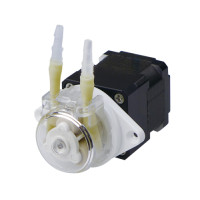
OEM Peristaltic Pump ASP-103 with Stepper Motor, Max Flow Rate 150 mL/min
This OEM peristaltic pump (ASP-103 series) can generate flow rates as high as 150 mL/min. The pumps ..
$0.00

Miniature Diaphragm Pump ASP-LP100, Max. Flow Rate 150mL/min, Air or Liquid, Different Motor Options
This miniature diaphragm pump is based on a motor that drives a connecting rod to oscillate an elast..
$92.00

OEM Peristaltic Pump ASP709 Max Flow Rate 530 mL/min, 4 Rollers Low Flow Pulsation
The OEM peristaltic pump (ASP-709OEM) can achieve flow rates up to 530 mL/min and is easily integrat..
$465.00
Tags Sample Preparation, HPLC, Syringe Pump, Analytical Instrument, Precision Metering