
Practical Fluidic Interface Guide for Electric Rotary Valves in Laboratory Automation
The electric rotary or multi-channel switching valve is a stepper motor-driven fluid handling valve designed for automated fluidics applications. This precise rotary valve automates the routing of fluidic volumes, allowing for the handling of aggressive fluids and switching flow directions as needed. For instance, in a multi-channel distribution valve, a common central port connects the stator and rotator, enabling the switching of flow direction between different ports with a rapid response time of less than 120ms for adjacent ports.
This switching valve can communicate through RS-232, RS-485, or CAN interfaces, allowing for multi-valve arrangements of up to 15 valves in one group. See Figure 1 for the wiring instruction. It supports group control and individual addressing, making it versatile for various automation needs. The wetted materials in the flow path are PCTFE/Sapphire and can be customized upon request.

Fig1. Electric Rotary Valve Wiring Instruction
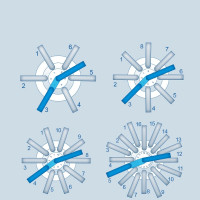
Our solution offers a cost-effective way to construct fluid handling modules for instrument design or laboratory experiments. We offer a range of options, including 6-channel, 8-channel, 10-channel, 12-channel, and 16-channel electric rotary valves. These valves feature small dead volumes and accurate positioning systems, making them ideal for use with industrial syringe pumps or piston pumps. They can establish various fluid handling modes, such as one inlet and multiple outlets (distribution mode) or multiple inlets and one outlet.
Electric rotary valves find wide application in analytical instruments. They are commonly used in precision fluid handling tasks, including but not limited to:
- In vitro diagnostics (IVD)
- Biological sample preparation and distribution
- Sample injection or selection
- Reagent recirculation systems
- Microfluidics sample delivery or perfusion systems
- Automatic reagent delivery
- High-speed sample enrichment
- Column back flushing
- Flow cytometry or chemistry analyzers
- Mass spectrometers
- Elemental analyzers
- Other analytical instruments

Fig2. Fluidic Connections Between a Compact Industrial Syringe Pump and an Electric Rotary Valve
When constructing an enclosed fluidics flow path and interface between the electric rotary valves and tubing connections, consider the following tips:
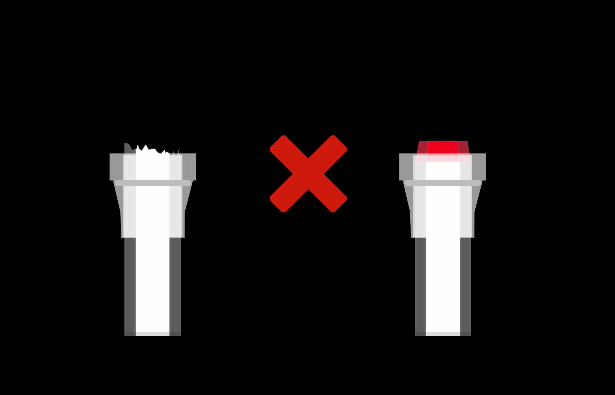
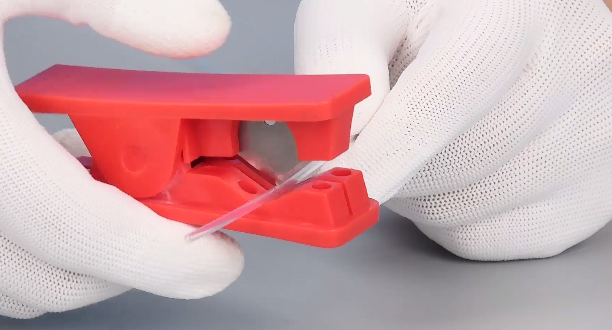
- Use a tubing cutter to evenly trim the end of the tubing, ensuring no burrs or deformation of the tubing during installation.
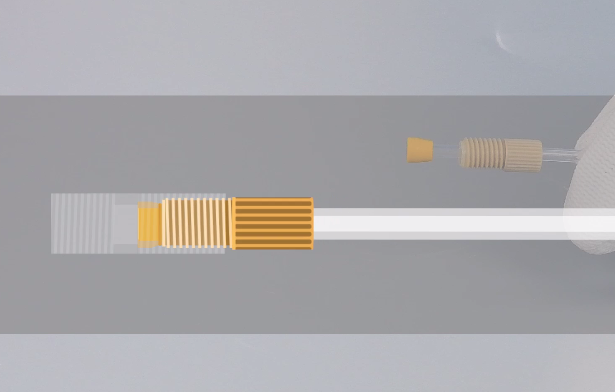
- For standard fluidic connections, use 1/4"-28 UNF nuts and ferrules to connect regular 1/8" OD tubing to the Female 1/4"-28 ports on the valve.
- For large ID tubing connections, consider the following options:
- Soft Tygon tubing: Use a barb adapter to connect the soft tubing to hard ETFE or Teflon tubing
- Hard ETFE or Teflon tubing: Use a Push-to-connect John Guest reducer to join the large OD tubing to a regular 1/8" OD tubing, then connect it to the female 1/4"-28 UNF ports on the valve.
We are committed to providing high-quality fluid handling solutions tailored to your needs. Please feel free to reach out for more information or to discuss your specific requirements.

Related Articles
Electric Rotary or Selector Valve Application Examples
Electric rotary or selector valve is a stepper motor driven fluid handling valve designed for automated fluidics applications. The precise rotary valve provides automated routing of fluidic volumes for aggressive fluids. We offer a cost-effective solution to build your fluid handling module in the instrument design or laboratory experiments. 6-way, 8-way, 10-way, 12-way and 16-way electric rotary valves are available for order. With small dead volumes and accurate positioning systems, they are widely used in analytical instruments. A variety of typical applications are included but not limited to.
Selection Guide of Electric Rotary Valve in Precision Fluidics
A multi-channel electric rotary valve is a type of valve that is used to control the flow of fluids in precision fluidic systems. It is typically used in applications where precise control of fluid flow is required, such as in the manufacturing of semiconductors or the analysis of biological samples. The basic principle of a rotary valve is that it uses a rotor with multiple channels or openings to control the flow of fluid through a system. The rotor is mounted on a shaft and can be rotated to align the channels with inlet and outlet ports in the valve body. When the channels are aligned with the inlet and outlet ports, fluid can flow through the valve. When the channels are not aligned with the inlet and outlet ports, the flow of fluid is blocked.

Syringe Selection Guide for Programmable Syringe Pumps
Syringe pumps are devices that accurately and precisely dispense small amounts of fluid over time. They work by using a motor to drive a plunger that pushes fluid out of a syringe. The pump's control unit can be programmed to dispense a specific volume of fluid at a specific flow rate over a specified period of time. The motor moves the plunger at a consistent speed, ensuring that the desired volume of fluid is dispensed at the desired rate. Syringe pumps are user-friendly and easy to operate, and many models have the option to reverse the direction of the plunger (withdrawal mode) to flush a line or empty a syringe.
Industrial Syringe Pump Communication Command Examples (Hexagon Codes)
The ASP-SY0825 is a compact OEM industrial syringe pump module designed for precision liquid handling applications. This new syringe pump can communicate through RS-232, RS-485, or CAN interfaces, allowing for multi-pump arrangements of up to 15 pumps in one group. It supports group control and individual addressing, making it versatile for various automation needs. This pump is ideal for tasks such as auto pipetting, sample dilution or mixing, and sample dispensing in analytical instruments. It is available in three volume options: 5 mL, 12.5 mL, and 25 mL. If you have any questions or require more details, please don't hesitate to reach out to our product specialist.

Syringe Replacement Procedure for Efficient Fluid Handling in Pump Systems
The ASP-SY0360 is a compact OEM industrial syringe pump module designed for precision liquid handling applications. This syringe pump can communicate through RS-232, RS-485, or CAN interfaces, allowing for multi-pump arrangements of up to 15 pumps in one group. It supports group control and individual addressing, making it versatile for various automation needs. This pump is ideal for tasks such as auto pipetting, sample dilution or mixing, and sample dispensing in analytical instruments. Industrial syringe pumps find wide application in analytical instruments.

How to Select Industrial Clamp-on Ultrasonic Flowmeter?
Clamp-on ultrasonic flowmeters are non-invasive devices used to measure the flow rate of liquids in pipes without the need for cutting into the pipe or stopping the flow. They work on the principle of ultrasonic transit-time flow measurement, which involves sending ultrasonic signals through the fluid and measuring the time it takes for the signals to travel between two transducers. By comparing the upstream and downstream transit times, the flowmeter can calculate the velocity of the fluid and, subsequently, the flow rate.

Commonly Asked Questions for Turbine Flow Meters
Turbine flow meters are essential instruments in various industries for measuring the flow rates of liquids and gases. Known for their high accuracy, reliability, and versatility, these meters are widely used in sectors such as water treatment, oil and gas, and chemical processing. This article addresses some of the most commonly asked questions about turbine flow meters, providing insights into their operation, applications, advantages, limitations, and maintenance requirements. Whether you're new to turbine flow meters or looking to deepen your understanding, this guide offers valuable information to help you make informed decisions.

Point-of-Use Dilution Applications: Ensuring Precision and Efficiency
In industries where precise chemical mixing is critical, point-of-use dilution systems offer significant advantages. These systems are designed to mix concentrated chemicals with a solvent (often water) at the point of use, ensuring the correct dilution ratio is achieved right before application. This method contrasts with batch dilution, where large volumes are mixed and stored, potentially leading to inconsistencies and waste.
Related Products

Electrical Rotary Valve, 10 Ports, Orifice size 1.2 mm, Max. Pressure 1.5 MPa
Electric rotary or selector valve is a stepper motor driven fluid handling valve designed for fluid ..
$1,018.60
-200x200.png "Industrial Syringe Pump ASP-SY03 Integrated with Electrical Rotary Valve, Max Stroke 60 mm")
Industrial Syringe Pump ASP-SY03 Integrated with Electrical Rotary Valve, Max Stroke 60 mm
ASP-SY-03 is a compact OEM pump module designed to handle precision liquid handling application. The..
$0.00

Electrical Rotary Valve for Syringe Pumps
The electric rotary or selector valve is a fluid handling valve driven by a stepper motor, designed ..
$0.00
Tags Sample Preparation, HPLC, Syringe Pump, Analytical Instrument, Rotary Valve, Laboratory Automation