
Industrial Syringe Pump Communication Command Examples
The ASP-SY0825 is a compact OEM industrial syringe pump module designed for precision liquid handling applications. This new syringe pump can communicate through RS-232, RS-485, or CAN interfaces, allowing for multi-pump arrangements of up to 15 pumps in one group. It supports group control and individual addressing, making it versatile for various automation needs. This pump is ideal for tasks such as auto pipetting, sample dilution or mixing, and sample dispensing in analytical instruments. It is available in three volume options: 5 mL, 12.5 mL, and 25 mL. If you have any questions or require more details, please don't hesitate to reach out to our product specialist.
Typical Applications
- Precision liquid handling or delivery
- Pharmaceutical industry
- Microfluidics system
- Integration with analytical instruments for sample preparation
- Auto sampling for in vitro diagnostics (IVD)
- Flow injection systems and ammonia nitrogen analyzer
- Other precision metering applications (mass spectrometer, flow cytometer)

Fig 1. Syringe Pump Mechanical Configuration
| Cable | Cable Color |
| RS232 communication cable | Blue White- RX, Black White -GND, Orange White-Tx |
| RS485 and CAN communication cable | Orange -B, Purple -A, Green -H and Yellow -L |
| Power cable | Red- Positive; Black- Negative |
| Port | Description |
| + | VDC24 Positive |
| - | VDC24 Negative |
| TX | RS232 Data Input |
| RX | RS232 Data Output |
| GND | RS232 Grounding |
| A | RS485A |
| B | RS485B |
| A+, A- | Stepper motor phase A wiring |
| B+, B- | Stepper motor phase B wiring |
| IO1 | NC |
| IO2 | Encoder Phase A |
| IO3 | Encoder Phase B |
| GND | GND |
| PE | Grounding |

Fig2. Syringe Pump Drive Schematic

Fig. 3 Syringe Pump Wiring Instruction
Take the industrial Syringe Pump ASP-SY0825 as an example to show how to calculate the pump resolution. The volume of ASP-SY0825 is 25mL. The stepper motor is 0.9 degrees per step. Thus,
- 400 steps per revolution
- The lead screw pitch distance is 1mm and 30 mm stroke.
- Total steps per stroke is calculated: 12,000 full steps
- The pump linear actuator resolution: 30 mm / 12,000 steps = 2.5 µm/step
- The pump volume resolution: 25,000 µL / 12,000 steps = 2.083 µL/step
The following is the conversion of the volumes to steps and the commonly used commands to query pump address, reset pump, set pump speed in RPM, and pump aspiration and dispensing.
| Volume (mL) | Dec (Steps) | HEX (Steps) |
| 1.25 | 600 | 258 |
| 2.50 | 1200 | 4B0 |
| 5.00 | 2400 | 960 |
| 7.50 | 3600 | E10 |
| 10.0 | 4800 | 12C0 |
| 12.5 | 6000 | 1770 |
| 15.0 | 7200 | 1C20 |
| 17.5 | 8400 | 20D0 |
| 20.0 | 9600 | 2580 |
| 22.5 | 10800 | 2A30 |
| 25.0 | 12000 | 2EE0 |


Related Articles

Introduction of LC, HPLC, UPLC, MS and LC-MS and Flow Control Techniques- Part II
This article describes the basic principles of Liquid Chromatography (LC), High performance Liquid Chromatography (HPLC), Ultra performance Liquid Chromatography (UPLC), Mass spectrometry (MS), Liquid Chromatography-Mass Spectrometry (LC-MS) techniques in analytical chemistry and their applications. The role of HPLC columns and sample injection are briefly introduced. This is part II of this article.
Syringe Pump Flow Rate Calculation
This digital syringe pump (dLSP500) is designed for precision fluid handling laboratory applications. It accepts syringe size from 0.5uL to 60mL. Let's consider the dLSP500 syringe pump to estimate the flow rate range. This pump has a linear translation speed range of 0.0833mm/min to 180mm/min, with a resolution of 0.03255µm/µstep. Table 1, 2, and 3 list commonly used syringe sizes and their inner diameters. The inner diameter of a 5 mL BD plastic syringe is approximately 11.98 mm. Using this information, we can calculate that the flow rate of the syringe pump ranges from 9.389 µL/min to 20.289 mL/min. The flow rates for other syringe sizes can be calculated in a similar manner. In addition, the average pressures for any syringe pump and syringe together can be estimated by dividing the average force applied on the syringe pump and the syringe surface area.

Syringe Pump Selection Guide
A syringe pump is a device that is used to accurately and precisely dispense small amounts of fluid over a period of time. It typically consists of a control unit that is connected to a motorized pump and a syringe. Syringe pumps work by using a motor to drive a plunger that pushes fluid out of a syringe. The control unit of the pump can be programmed to dispense a specific volume of fluid at a specific flow rate over a specified period of time. The motor moves the plunger at a consistent speed, ensuring that the desired volume of fluid is dispensed at the desired rate. Some syringe pumps also have the ability to reverse the direction of the plunger, allowing them to draw fluid back into the syringe. This feature can be useful for tasks such as flushing a line or emptying a syringe. Syringe pumps are highly accurate and precise, making them an essential tool in a variety of applications.

Syringe Selection Guide for Programmable Syringe Pumps
Syringe pumps are devices that accurately and precisely dispense small amounts of fluid over time. They work by using a motor to drive a plunger that pushes fluid out of a syringe. The pump's control unit can be programmed to dispense a specific volume of fluid at a specific flow rate over a specified period of time. The motor moves the plunger at a consistent speed, ensuring that the desired volume of fluid is dispensed at the desired rate. Syringe pumps are user-friendly and easy to operate, and many models have the option to reverse the direction of the plunger (withdrawal mode) to flush a line or empty a syringe.

Practical Fluidic Interface Guide for Electric Rotary Valves in Laboratory Automation
The electric rotary or multi-channel switching valve is a stepper motor-driven fluid handling valve designed for automated fluidics applications. This precise rotary valve automates the routing of fluidic volumes, allowing for the handling of aggressive fluids and switching flow directions as needed. For instance, in a multi-channel distribution valve, a common central port connects the stator and rotator, enabling the switching of flow direction between different ports with a rapid response time of less than 120ms for adjacent ports. This switching valve can communicate through RS-232, RS-485, or CAN interfaces, allowing for multi-valve arrangements of up to 15 valves in one group. See Figure 1 for the wiring instruction. It supports group control and individual addressing, making it versatile for various automation needs. The wetted materials in the flow path are PCTFE/Sapphire and can be customized upon request.

Syringe Replacement Procedure for Efficient Fluid Handling in Pump Systems
The ASP-SY0360 is a compact OEM industrial syringe pump module designed for precision liquid handling applications. This syringe pump can communicate through RS-232, RS-485, or CAN interfaces, allowing for multi-pump arrangements of up to 15 pumps in one group. It supports group control and individual addressing, making it versatile for various automation needs. This pump is ideal for tasks such as auto pipetting, sample dilution or mixing, and sample dispensing in analytical instruments. Industrial syringe pumps find wide application in analytical instruments.

Industrial Syringe Pump Basics: Accuracy/Precision, Resolution and Flow Rate Calculation
The resolution of industrial syringe pumps refers to the smallest increment of movement or volume that the pump can achieve. It is typically specified by the manufacturer and is important for applications requiring precise control over fluid delivery. To calculate the resolution of a syringe pump, you need to know the steps per revolution of the motor (if it's a stepper motor-driven pump) or the linear resolution of the pump mechanism. The linear resolution is usually given in units of distance per step (e.g., mm/step or µm/step). In this article, the basics of typical industrial syringe pumps, namely, the accuracy and precision, resolution and flow rate calculation (stepper motor driven), are briefly reviewed.

How to Select Industrial Clamp-on Ultrasonic Flowmeter?
Clamp-on ultrasonic flowmeters are non-invasive devices used to measure the flow rate of liquids in pipes without the need for cutting into the pipe or stopping the flow. They work on the principle of ultrasonic transit-time flow measurement, which involves sending ultrasonic signals through the fluid and measuring the time it takes for the signals to travel between two transducers. By comparing the upstream and downstream transit times, the flowmeter can calculate the velocity of the fluid and, subsequently, the flow rate.

Commonly Asked Questions for Turbine Flow Meters
Turbine flow meters are essential instruments in various industries for measuring the flow rates of liquids and gases. Known for their high accuracy, reliability, and versatility, these meters are widely used in sectors such as water treatment, oil and gas, and chemical processing. This article addresses some of the most commonly asked questions about turbine flow meters, providing insights into their operation, applications, advantages, limitations, and maintenance requirements. Whether you're new to turbine flow meters or looking to deepen your understanding, this guide offers valuable information to help you make informed decisions.

Point-of-Use Dilution Applications: Ensuring Precision and Efficiency
In industries where precise chemical mixing is critical, point-of-use dilution systems offer significant advantages. These systems are designed to mix concentrated chemicals with a solvent (often water) at the point of use, ensuring the correct dilution ratio is achieved right before application. This method contrasts with batch dilution, where large volumes are mixed and stored, potentially leading to inconsistencies and waste.

Programmable Syringe Pump Application Notes
The dLSP 501W programmable syringe pump stands out as a powerful tool for laboratories and industries that demand precision, reliability, and ease of use. Its comprehensive features and flexible operation modes ensure that researchers can achieve their experimental goals with confidence and accuracy. Whether optimizing chemical reactions, developing cutting-edge microfluidic systems, or advancing medical research, the dLSP 501W is the perfect partner for success. Explore the future of precision fluid handling with this revolutionary syringe pump. Here are the highlights of this innovative device:

Aurora Pro Scientific: Precision Fluid Handling Solutions
Aurora Pro Scientific provides innovative syringe and piston pumps designed for precision fluid handling in laboratory and industrial settings. Our offerings include programmable syringe pumps with touchscreen controls and customizable infusion/withdrawal modes, compact OEM syringe pumps for specialized integration, high-volume piston pumps with solenoid valves for automation, and fixed-volume syringe pumps with integrated glass syringes for accurate dosing. They also feature multi-channel syringe pumps for synchronized, parallel fluid handling, enhancing efficiency and adaptability in diagnostics, research, and automation.
Related Products
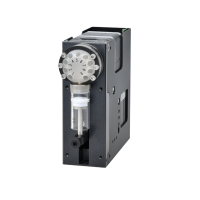
Industrial Syringe Pump ASP-SY01 Integrated with Electrical Rotary Valve, Max Stroke 30 mm
ASP-SY-01 is a compact OEM pump module designed to handle precision liquid handling application. The..
$0.00
-200x200.png "Industrial Syringe Pump ASP-SY03 Integrated with Electrical Rotary Valve, Max Stroke 60 mm")
Industrial Syringe Pump ASP-SY03 Integrated with Electrical Rotary Valve, Max Stroke 60 mm
ASP-SY-03 is a compact OEM pump module designed to handle precision liquid handling application. The..
$0.00
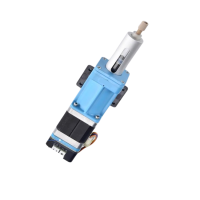
Industrial Syringe Pump Integrated with Glass Syringe, Single Channel and 30mm Stroke
This compact OEM industrial syringe pump module is designed for precise liquid handling applications..
$0.00
Tags Sample Preparation, HPLC, Syringe Pump, Analytical Instrument