
Transmission Measurements Part II: MIR TRANSMISSION SPECTROSCOPY
Transmission spectroscopy is a widespread analysis technique that consists in measuring the absorption produced by a given sample when a beam of infrared light goes through them. Transmission spectroscopy applies mostly to liquids and gases, yet pressed powders or thin-films might also be characterized using this methodology. Besides spectroscopic measurements, transmission measurements are also useful to evaluate the properties of optical components, such as windows and filters. Arcoptix offers many solutions to perform transmission spectroscopy that rely either on our FT-NIR or MIR-FTIR instruments.
MIR TRANSMISSION SPECTROSCOPY
Unlike NIR systems which rely heavily on optical fibers, MIR transmission spectroscopy techniques try as much as possible to work in free-space, as fibers in the MIR are usually lossy and fragile. Owing to their small size and light weight, the Arcoptix FTIR instruments are easily integrated and aligned in any existing setup. To this end, our entire MIR portfolio is by default free-space, while removable fiber couplers are also provided on most units. Furthermore, most of our product line is, or can be made compatible with Thorlabs 30mm cage system, which then eases the usage of common optical parts, including mirrors, filters and so on.
Transmission spectroscopy can be achieved by placing a sample directly in the beam path, while the instrument and light source are simply standing on a desktop or an optical table, as illustrated here below with the ARCLIGHT-MIR and the FMTIR-L1-120-4TE.

Some applications have stricter requirements, for instance the might require to work in a purged environment or at least limit the interaction length of the infrared beam with molecules present in ambient air (typically H2O and CO2). This usually implies that the instrument and its light source will have to be paired or adapted to a sample compartment or a custom gas cell, or even that the instrument needs to be entirely integrated to an existing measuring system. In that case, Arcoptix offers two models of rugged and compact OEM FTIR spectrometers, which offer extensive options for integration and customization. The OEM010 is a fully integrated unit with a built-in light source, interferometer and detector. The OEM011 is extremely similar, except for the detector that lies in an external module, thus offering more flexibility.
Various accessories can be mounted on both models of OEM FTIR, such as flat or parabolic mirrors that can be used to couple light into a fiber or a waveguide, or simply redirect the beam to other components. Arcoptix also has extensive expertise in designing and prototyping sampling accessories, which can be tailored for specific applications.

For example, the OEM-PART-CMP is a standard accessory for the OEM010 that was inspired by customers requirements. This input/output module holds a beamsplitter and a set of flat mirrors that allow to send and collect light along the same path (common path configuration). This configuration was successfully used to perform transflectance spectroscopy on thin films that were deposited on a transparent substrate (ZnSe). Light was focused on the sample by mounting a parabolic off-axis reflector to the OEM-PART-CMP.
Another example is illustrated here below, where the OEM-PART-CMP was coupled to a custom made flow cell with a short path of only 1.5mm. This enabled to perform liquid transmission spectroscopy on a high pressure, high temperature, low volume of liquid. Another example is illustrated here below, where the OEM-PART-CMP was coupled to a custom made flow cell with a short path of only 1.5mm. This enabled to perform liquid transmission spectroscopy on a high pressure, high temperature, low volume of liquid.


Related Articles

Pump Selection Table and Guide
Aurora Pro Scientific offers full product lines of peristaltic pumps, syringe pumps, gear pumps, micro piston pumps, industrial syringe pumps, diaphragm pumps, centrifugal pumps and piezoelectric micropumps/blowers etc. This article primarily provides an overview of their working principles, pump configuration, performance and selection consideration for our users.

How to Calibrate the Flow Rate of a Peristaltic Metering Pump?
For a specific ID tubing with a certain length, the flow rate of peristaltic pump is proportional to the pump drive speed (RPM) within the linear region of its operation. The actual flow of a peristaltic pump depends on many factors, such as the fluidics properties (viscosity), the way the tubing installation, system hydraulic resistance (fitting, tubing flow resistance), the tubing stiffness and operation time as well fluid temperature. These factors cannot be accounted during factory testing and calibration. The flow rate even changes a little bit after tubing burn-in (first 1-2 hours operation). One can easily notice that the flow rate of a peristaltic pump gets attenuated. Calibrating a peristaltic pump becomes necessarily to ensure accurate dispensing of liquids. The steps can vary based on the specific model and features of your peristaltic pump, but here are general guidelines for calibrating a peristaltic pump with a calibration function.

Peristaltic Metering Pump Types and Their Working Modes
One of the key advantages of peristaltic pumps is their ability to handle delicate and viscous fluids without damaging them. Unlike other types of pumps, the flexible tubing used in peristaltic pumps does not come into contact with the fluid, which means that there is no risk of the fluid being damaged or contaminated. Peristaltic pumps are also known for their reliability and durability. They are simple in design and have few moving parts, which means that they require minimal maintenance and have a long lifespan. They are also able to operate in a wide range of temperatures and environments, making them suitable for use in a variety of industries.
Related Products
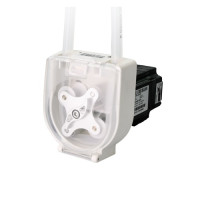
OEM Peristaltic Pump ASP-501 with Servo Motor, Flow Rate 0.3423-6663mL/min
This OEM peristaltic pump (ASP-500 series) can generate flow rates as high as 6663mL/min. The pumps ..
$0.00
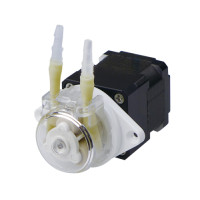
OEM Peristaltic Pump ASP-103 with Stepper Motor, Max Flow Rate 150 mL/min
This OEM peristaltic pump (ASP-103 series) can generate flow rates as high as 150 mL/min. The pumps ..
$0.00

OEM Peristaltic Pump ASP709 Max Flow Rate 530 mL/min, 4 Rollers Low Flow Pulsation
The OEM peristaltic pump (ASP-709OEM) can achieve flow rates up to 530 mL/min and is easily integrat..
$465.00
Tags Sample Preparation, HPLC, Syringe Pump, Analytical Instrument, NIR Spectrometer, Metering Pump