
Technical Articles
Technical Articles
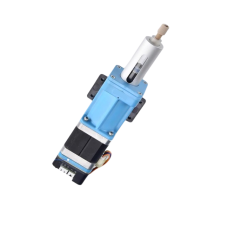
Industrial Syringe Pump Communication Command Examples (Hexagon Codes)
The ASP-SY0825 is a compact OEM industrial syringe pump module designed for precision liquid handling applications. This new syringe pump can communicate through RS-232, RS-485, or CAN interfaces, allowing for multi-pump arrangements of up to 15 pumps in one group. It supports group control and individual addressing, making it versatile for various automation needs. This pump is ideal for tasks such as auto pipetting, sample dilution or mixing, and sample dispensing in analytical instruments. It is available in three volume options: 5 mL, 12.5 mL, and 25 mL. If you have any questions or require more details, please don't hesitate to reach out to our product specialist.

List of Global HPLC Manufacturers
High-Performance Liquid Chromatography (HPLC) is a powerful analytical technique used to separate, identify, and quantify components in a mixture. It operates on the principle of chromatography, where the sample is dissolved in a solvent (mobile phase) and passed through a column packed with a stationary phase. The components of the sample interact differently with the stationary phase, causing them to separate based on their respective chemical properties, such as size, polarity, and affinity.

Overview of Microfluidics Applications in Life Science, Biotechnology and Biopharmaceuticals
Microfluidics, a rapidly evolving field at the intersection of physics, engineering, chemistry, biology, and biotechnology, has revolutionized numerous aspects of life science, biotechnology, and biopharmaceutical industries. With its ability to manipulate small volumes of fluids on the microscale, microfluidics offers unprecedented control and precision, leading to a wide array of applications. Here's an overview of microfluidics applications in these fields and some representative products showcasing the transformative impact of microfluidic technologies on research, diagnostics, and therapy development.

Laboratory Vacuum Filtration Apparatus Basics
Vacuum filtration is a critical technique applied in laboratories and industrial processes for the separation of solids from liquids through the use of reduced pressure. Widely utilized in fields such as chemistry, biology, the pharmaceutical industry, and environmental analysis, this method efficiently removes particles, clarifies solutions, and isolates precipitates or solid residues. Also known as negative pressure filtration, its fundamental principle involves creating negative pressure beneath the membrane, leveraging the pressure differential to accelerate liquid flow and achieve effective solid-liquid separation. A typical vacuum filtration setup includes the following components.

Practical Tips and Considerations When Using Vacuum Pumps in Spin Coater
The vacuum pump in a spin coater is typically used to remove air from the space between the substrate and the chuck, ensuring good contact and adhesion between the substrate and the coating material. The vacuum helps to eliminate air pockets and enhance the uniformity of the coating. Here's a general guide on how to use the vacuum pump in a spin coater and the practical tips and considerations.

Programmable Spin Coater Preventative Maintenance
When using a programmable spin coater, it's important to follow certain precautions to ensure safety, optimal performance, and longevity of the equipment. Additionally, regular preventative maintenance is crucial to address wear and tear, prevent malfunctions, and prolong the life of the spin coater. Here are some general precautions and preventative maintenance guidelines:

Introduction of Programmable Spin Coater
A programmable spin coater is a laboratory instrument used in the deposition of thin films onto substrates through a process called spin coating. Spin coating is a widely used technique in the fields of material science and microfabrication to create thin and uniform films of various materials, such as polymers, metals, and ceramics, on a substrate.

Syringe Selection Guide for Programmable Syringe Pumps
Syringe pumps are devices that accurately and precisely dispense small amounts of fluid over time. They work by using a motor to drive a plunger that pushes fluid out of a syringe. The pump's control unit can be programmed to dispense a specific volume of fluid at a specific flow rate over a specified period of time. The motor moves the plunger at a consistent speed, ensuring that the desired volume of fluid is dispensed at the desired rate. Syringe pumps are user-friendly and easy to operate, and many models have the option to reverse the direction of the plunger (withdrawal mode) to flush a line or empty a syringe.

Background Introduction to the Role of Peristaltic Pumps in Spectrometers and Spectroscopy
Spectrometers and spectroscopy represent pivotal tools in analytical chemistry, offering insights into the composition, structure, and properties of substances through the interaction of matter with electromagnetic radiation. These techniques have found applications across diverse scientific disciplines, including chemistry, physics, biology, medicine, and environmental science. The accuracy and reliability of data obtained through spectrometric analyses depend not only on the sensitivity of the instruments but also on precise fluid handling during the analytical process.

Laboratory Vacuum Filtration System Introduction
The Laboratory Vacuum Filtration System emerges as a versatile and indispensable tool, excelling in precise separation and filtration processes. Operating on the principle of creating a pressure differential across the filter medium by evacuating the air beneath it, this innovative system significantly enhances filtration rates. Intricately designed, the vacuum filtration system optimizes procedures for isolating solids from liquid samples, separating precipitates from solutions, and preparing samples for comprehensive analyses.