
Overview of Fluidics System in Flow Cytometry
1 Introduction:
Flow cytometry is a laser-based technology that rapidly analyzes cells (or particles) from a fluid sample to obtain precise information about their physical and chemical characteristics. The technique involves labeling cells with fluorescent markers and passing them one by one through a laser (or multiple lasers) while suspended in solution [1]. The interaction between cell and laser beam produces both scattering and fluorescent light signals that are received by a detector, converted into electrical signals, then analyzed by a computer to ascertain cellular information [2]. One of the key principles of flow cytometry is that it is a high-throughput method, meaning that it can analyze thousands or even millions of particles per second. This makes it a powerful tool for studying large numbers of cells or beads, and for performing rapid, quantitative analysis of cellular populations. For example, some high-throughput flow cytometers can analyze up to 100,000 cells per second [3].
This powerful technique can determine cell characteristics such as cell size, count, health, and cycle status, and has a variety of applications including cancer research, immunology, hematology, disease diagnostics, and more. There are many different applications for flow cytometry, including:
- Immunology: analyze the expression of different proteins on the surface of cells, allowing researchers to identify and quantify immune cell populations and to study immune responses.
- Cancer research: identify and characterize cancer cells, and to track the effectiveness of cancer therapies.
- Drug discovery: identify and characterize cells that are sensitive to certain drugs, helping to identify potential new treatments.
- Biotechnology: analyze and sort cells or beads for a variety of applications, such as gene expression analysis and protein purification.
- Environmental science: Flow cytometry can be used to analyze water samples and identify and quantify microorganisms present in the sample.
- Animal artificial insemination: differentiate semen sperm cells and sort X and Y chromosomes based on DAN content difference etc.
- Other clinical applications: protein expression, cell cycle status, identification of distinct subsets of cells within a heterogenous samples.
2 Cytometry and its Subsystems
Flow cytometry usually consists of the following subsystems:
- Fluidics system: This is responsible for accurately measuring and delivering the sample passing through the laser beam. It consists of a pump, tubing, and flow cells to ensure that the sample flows through the cytometer at a constant rate.
- Laser system: This generates the light used to excite the sample particles. It consists of a laser, mirrors, and filters to ensure that the correct wavelength of light is used.
- Optics system: This collects and filters the light emitted by the sample particles after they are excited by the laser. It consists of lenses, detectors, and filters to ensure that only the desired wavelengths of light are measured.
- The components of the optical system include excitation light sources, lenses, and filters used to collect and move light around the instrument and the detection system that generates the photocurrent.
- The electronics are the brains of the flow cytometer. The photocurrent from the detector is digitized and processed to be saved for subsequent analysis.
- Data analysis system: This processes and analyzes the data collected by the cytometer. It consists of a computer and software that can sort, count, and classify the particles based on their characteristics.
- User interface: This allows the user to input parameters and control the operation of the cytometer. It consists of a keyboard, touch screen, or other input devices.
3 Fluidics Delivery System
The fluidics system, as one of the key components of a flow cytometer, which is responsible for moving the sample through the instrument and providing the necessary hydrodynamic conditions for accurate measurement. The schematic of the 3D hydrodynamic focusing is shown in Figure 1. The sample stream is injected into the cuvette and immediately squeezed by the sheath flow surrounded to create the single file of the cell stream. Due to the large flow ratio (>100:1) between sheath flow and the sample flow, the injected sample stream is significantly diluted and the cells are speeded up to separate the distance between each other. Figure 2 illustrates how to introduce the sample stream and sheath streams into the flow cuvette with fluidic connectors. A good fluidics system in a flow cytometer is essential for ensuring that cells move past the interrogation point one at a time. The concentration of the cell suspensions, the ratio of the sample flow and sheath flow are crucial to avoid cells joined together as doublets or triplets, which leads inaccurate signal readings (coincidence).

Figure 1. Schematic of 3D Hydrodynamic focusing in flow cytometer

Figure 2. Sample injection and sheath flow control to the flow cuvette
3.1 What's sheath fluid?
Sheath fluid is the delivery medium that transports the samples to the optics detection area in controlled conditions. The core formulation of the sheath essentially is a diluted phosphate-buffered saline (PBS) solution composed of 99% water and 1% of sodium/potassium salts, phosphate salts etc. The sheath fluid not only impacts the depletion of cellular metabolites in cells afflicted by sorting induced cellular stress [1], but also impacts the hydrodynamic focusing of the cell suspensions into single-file. As a critical step of operating flow cytometry, it's vital that users must choose appropriate sheath fluid for their operation and understand the formulation and quality of the sheath fluid being used. There are several factors to consider when choosing sheath fluids. It is important to carefully consider these factors and test different sheath fluids before deciding on the best one for a particular experiment.
- Pre-mixed phosphate-buffered saline , Hepes-buffered saline, particularly for high pressure cell sorting (better PH control),
- Sheath fluid: DI water as sheath by adding 2-Phenoxyethanol used as surfactant to reduce surface tension.
- Compatibility with the sample: The sheath fluid should not interfere with the properties of the sample or alter the results of the experiment.
- Viscosity: The sheath fluid should have a viscosity that allows for smooth flow through the cytometer and consistent particle sizing. For example, DI water is used as sheath fluid resulting in dispersed cell alignment and more scattering signals, while PBS sheath helps to create a tighter sample core and better signals acquired.
- Refractive index: The refractive index of the sheath fluid should be close to that of the sample particles to minimize scattering of the laser light.
- pH and ionic strength: The pH and ionic strength of the sheath fluid should be compatible with the sample to prevent changes in the sample's properties.
- Fluorescence: The sheath fluid should not fluoresce or interfere with the fluorescence of the sample particles.
- Cost and availability: The sheath fluid should be cost-effective and readily available.
3.2 Two of the most common types of fluidics delivery system are:
- Pressure-based fluidics: In this system, a specialized tube forms a seal with the instrument, and the tube initiates a difference in pressure between the sample and sheath fluid, which directs the cells into the flow cytometer. Pressure-based fluidics is beneficial for smooth sample delivery, larger sample volume, and there is less risk that the sample will run out. This is widely used in high-throughput cytometers. However, backpressure can occur in this fluidics system and, if not properly maintained, this can cause clogging of sticky or large cells.
- Volumetric-based fluidics: In this system, precise volumes of sample are injected into the flow cytometer. This enables absolute cell count to be determined. Backpressure does not occur in this system, which accommodates for sticky and large cells and reduces the risk of clogging. Another advantage of this system is that it allows the sample to be obtained from any type of tube or plate. There are two types of sample delivery pump can be used:
- Peristaltic pumps: Rotating rollers press on the tubing to drive sample into the flow cytometer. Peristaltic pumps can quickly move large volumes of sample, but they do not provide accurate cell count, and are often used on less-expensive flow cytometers as a low-cost pump option.
- Syringe pumps: This type of pump is used in volumetric-based fluidics systems to inject precise sample volumes into the flow cytometer. These high-quality pumps are responsible for the ability of volumetric-based fluidics to perform absolute cell counting.

Figure 3 Two peristaltic pumps used in BD Accuri C6
4 Peristaltic Pump and its Applications
Peristaltic pumps offer several advantages in flow cytometry and used in both sample injection and sheath flow delivery.
- Contamination Prevention: Since the fluid only contacts the tubing, peristaltic pumps minimize the risk of sample contamination.
- Gentle Handling: They provide gentle pumping action, which is crucial for maintaining cell viability and integrity, important in flow cytometry where sample quality is paramount.
- Precise Flow Control: Peristaltic pumps allow for accurate and reproducible flow rates, critical for maintaining consistent sample delivery in flow cytometry.
- Cost-Effective: The cost for a peristaltic pump with +/-2 % inaccuracy is much lower than those syringe pump counterparts.
However, due to its mechanical working principle of squeezing the tubing, it comes with the flow pulsation. To address the flow pulsation issues, these strategies can help optimize the performance of peristaltic pumps in flow cytometry applications, ensuring reliable and consistent fluid flow without significant pulsation.
- Increase Tubing Diameter: Using larger diameter tubing can help reduce pulsation.
- Use Pressure Dampeners: Installing pressure dampeners or accumulators in the fluid line can smooth out pulsations by absorbing pressure variations. See this article.
- Adjust Pump Speed: Sometimes, adjusting the pump speed can mitigate pulsation. Experiment with different speeds to find a setting that minimizes pulsation while maintaining the required flow rate.
- Utilize Multiple Pump Heads: If your peristaltic pump allows, using multiple pump heads in sequence can help smooth out flow by distributing the pulsations across different sections of tubing.
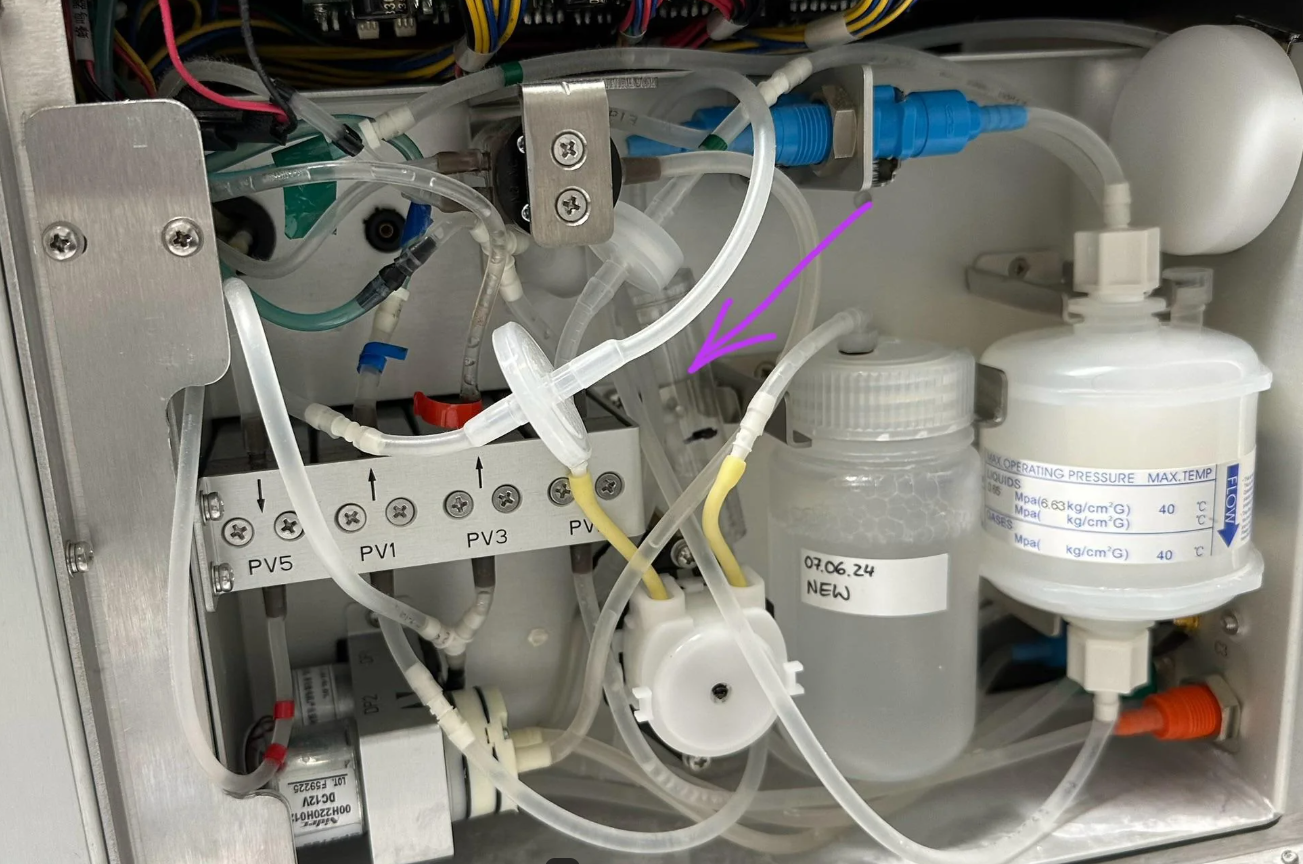
Figure 4 Peristaltic pump and flow dampener
5 Examples of cytometers using peristaltic pumps:
Recently, several cytometers have come to the market with peristaltic pump designs with dampening systems and claims of “pulsation-less flow".
- BD Accuri C6 Flow Cytometer: Features two peristaltic pumps—one for sheath fluid and one for waste. Adjustable flow rates from 10–100 uL/min, suitable for specific applications.
- Beckman Coupler Cytoflex: Utilizes peristaltic pumps with hydrodynamic focusing to manage sheath flow fluctuations, ensuring pulsation-less delivery.
- NanoCollect WOLF: A specialized cytometer employing peristaltic pumps to optimize cell distribution and improve accuracy.
- HyperCyt: Incorporates peristaltic pumps for pulsation-free flow, enhancing detection in various applications.
- NovoCyte: Designed with peristaltic pumps, offering advanced features to manage sample throughput and minimize artifacts.
- BD FACSLyric Flow Cytometer: Employs peristaltic pumps to achieve precise cell distribution, essential for accurate population studies.
- MACS Flow cytometry: Leverages peristaltic pumps in a specialized system to enhance detection capabilities, suitable for complex biological analyses.
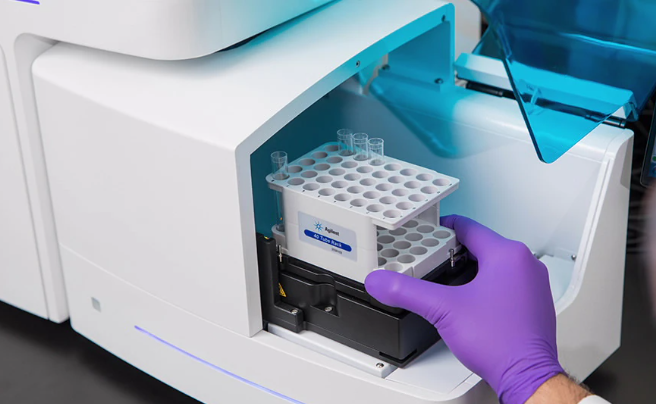
Figure 5 Agilent Flow Cytometer
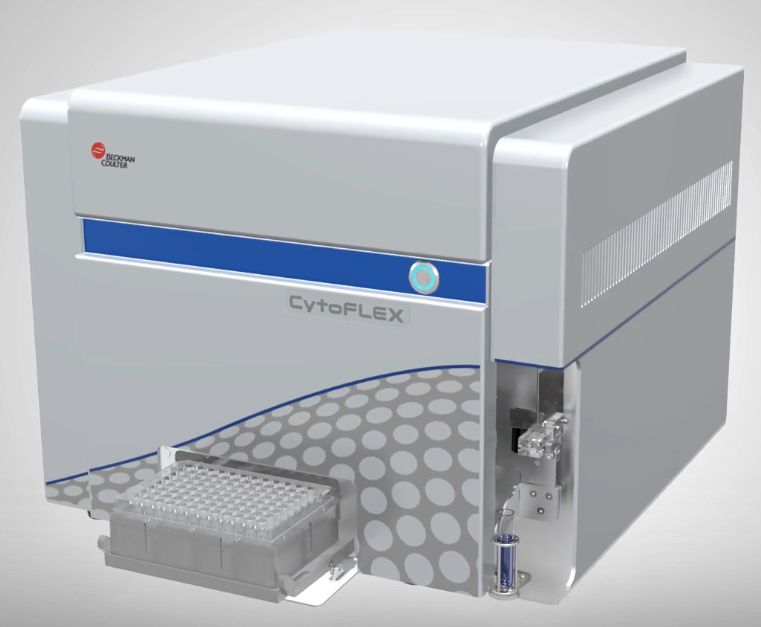
Figure 6 CytoFlex Flow Cytometer
6 References:
[1] Kamilah Ryan, Rebecca E Rose et al. Cytometry A 2021 Sep 99(9): 921-929: doi: 10.1002/cyto.a.24361. Epub 2021 May.
[2] https://www.thermofisher.com/us/en/home/life-science/cell-analysis/cell-analysis-learning-center/molecular-probes-school-of-fluorescence/flow-cytometry-basics/flow-cytometry-fundamentals/fluidics-flow-cytometer.html#:~:text=The%20fluidics%20system%20is%20the,interrogation%20point%20for%20data%20collection.
[3] https://www.bio-rad.com/en-us/product/ze5-cell-analyzer?ID=OC62Q015
[5] https://www.labmanager.com/product-focus/flow-cytometry-fluidics-and-versatility-in-flow-23778
[6] https://www.ncbi.nlm.nih.gov/pmc/articles/PMC4035220/

Related Products
Industrial Syringe Pump ASP-SY01 Integrated with Electrical Rotary Valve, Max Stroke 30 mm
ASP-SY-01 is a compact OEM pump module designed to handle precision liquid handling application. The..
$0.00
-200x200.jpg "Intelligent Laboratory Peristaltic Pump LabF1 Plus (1-150RPM), Dispensing Type, Flow Rate 0.053-775mL/min, LCD Touch Screen")
Intelligent Laboratory Peristaltic Pump LabF1 Plus (1-150RPM), Dispensing Type, Flow Rate 0.053-775mL/min, LCD Touch Screen
This dispensing peristaltic pump can generate 0.01 -9999.99 mL dispensing volumes at adjustable..
$978.00

Intelligent Laboratory Peristaltic Pump IdentiFlo®, Compact Size with 4 Independent Control Channels, 5Inch Touchscreen
This intelligent laboratory peristaltic pump IdentiFlo® features compact size, 5-inch touchscreen an..
$1,299.98
Tags Sample Preparation, Drug Delivery, Reagent Injection, Cell Culture, Flow Cytometer