
Blogs
Select a sub-category

Peristaltic Pump Tubing Selection Guide
Peristaltic pumps are typically used to pump sterile or aggressive fluids without exposing those fluids to contamination from exposed pump components. They are self-priming, reversible and highly reliable. Also, peristaltic pumps are suitable for applications where isolation of the product from environment is critical, such as pumping abrasives, corrosive or/and viscous fluids. There are a wide variety of applications of peristaltic pumps listed but not limited: Medicine: Dialysis machine/medical infusion pumps, blood transfusion ; Testing and research: Auto-analyzer , analytical chemistry experiments, media dispensers; Chemical handling: Pharmaceutical production, dosing systems etc.

HPLC Column Selection Guide
Chromatography is a laboratory technique commonly used for the separation of a mixture. The mixture is dissolved in a fluid called the mobile phase, which carries it through a structure holding another material called the stationary phase. Column chromatography is a separation technique in which the stationary bed is within a tube. Thus, the column used in this analytical method is the heart of the chromatographic system. Common requirements for columns include high column efficiency, good selectivity and fast analysis speed etc. Packing materials for HPLC are mainly all porous spherical silica gel, organic polymer matrix or core-shell silica gel. Their particle sizes, for instance, 1.8 µm, 3 µm, 5 µm, 7 µm and 10 µm are available. The selection of columns, and classification and main features of packaging materials are described herein.
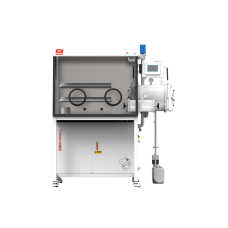
Fiber Optics Solutions for Air Sensitive Materials Analysis in Glove Box
Air sensitive materials such as metal hydrides, metal halides, metal alkyls and aryls, metalloids have applications in a number of chemical processes, such as certain catalysts, OLED (organic light-emitting diode) applications, inert gas welding, lithium-ion battery applications, and semiconductors. Because these materials can react, oxidize, or even explode when exposing to oxygen and moisture, it is critical to isolate them in an air-free environment. For example, glove boxes filled or purged with an inert gas such as nitrogen or argon gas offer a sealed environment that allows users to manipulate or handle these air sensitive materials (Figure 1). Both chemicals and equipment can be transferred in and out via the antechamber.
Key words: Air-sensitive; fiber optic; glove box; spectroscopy; analytical chemistry

Smart Valve Module to Enhance Laboratory Automation
3D cell culture systems, such as organ-on-chip, aim to revolutionize the drug development process. The 3D structure replicates the natural environment of cells. For example in human body, cells are supplied with nutrients and oxygen through the heart and blood vessels. Thus, in 3D cell culture models, this function can be performed by a microfluidics system. In vitro experiments with 3D cell culture models can better simulate the body environment than conventional 2D cell culture experiments, thus help to accelerate drug development process and reduce cost and animal experiments as well. Miniature valve from MEMETIS offers a variety of advantages in this cell culture application and other diagnostics applications, such as point-of-care and mobile health care.

HPLC Analysis of Aldehydes and Ketones in Air Samples
Aldehydes and ketones from industrial and automotive emission can pollute the environment. Also, as a lot of these compounds are carcinogens, several US EPA and state methods have been developed for their analysis in air and drinking water. This application note describes a HPLC method to analyze 15 commonly analyzed aldehydes and ketones in environmental air and auto exhaust. Prior to analysis, aldehydes and ketones are converted to hydrazone derivatives when the air sample passes through a solid phase extraction (SPE) cartridge composed of silica gel coated with 2,4-dinitrophenylhydrazine (DNPH). Then, the aldehyde/ketone DNPH derivatives are eluted from the SPE cartridge and analyzed by HPLC separation using a Uitisil® XB-C18 column and UV detection at 360 nm.

Introduction of FTIR, ATR, Fiber Optics, and ATR Probes in Spectroscopy and Associated Designs - Part II
This article describes the basic principles of FTIR, Attenuated Total Reflection-Infrared Spectroscopy (ATR-IR), Fiber Optical Spectroscopy techniques and their applications in in-line reaction monitor and process control. The design and selection of fiber coupler, fiber optical cable and fiber probe are briefly introduced. This is the Part II.

Introduction of FTIR, ATR, Fiber Optics, and ATR Probes in Spectroscopy and Associated Designs - Part I
This article describes the basic principles of FTIR, Attenuated Total Reflection-Infrared Spectroscopy (ATR-IR), Fiber Optical Spectroscopy techniques and their applications in in-line reaction monitor and process control. The design and selection of fiber coupler, fiber optical cable and fiber probe are briefly introduced. This is the Part I.

Counting Blood Cells with Dino-Lite Microscopes
Dino-Lite handheld models combined with a stand facilitate the laboratory capability to capture images and videos. Setup A provides precise XYZ movements when using a proper combination of coaxial lighting. Both the AM73515MT8A and BL-CDW back light offer dark field and bright field options which allow users to easily identify bacteria, protozoans, and distinguish between red and white blood cells. The AM73515MT8A also offers 5MP high resolution and a magnification range of 700x-950X. Using the full-screen 2X Digital Zoom feature found in the free imaging software at 950X mag with 5MP resolution, users can achieve 1900X magnification with 1.3MP resolution. Three setup combinations are recommended:

Introduction of LC, HPLC, UPLC, MS and LC-MS and Flow Control Techniques- Part I
This article describes the basic principles of Liquid Chromatography (LC), High performance Liquid Chromatography (HPLC), Ultra performance Liquid Chromatography (UPLC), Mass spectrometry (MS), Liquid Chromatography-Mass Spectrometry (LC-MS) techniques in analytical chemistry and their applications. The role of HPLC columns and sample injection are briefly introduced. This is part I of this article.

Introduction of LC, HPLC, UPLC, MS and LC-MS and Flow Control Techniques- Part II
This article describes the basic principles of Liquid Chromatography (LC), High performance Liquid Chromatography (HPLC), Ultra performance Liquid Chromatography (UPLC), Mass spectrometry (MS), Liquid Chromatography-Mass Spectrometry (LC-MS) techniques in analytical chemistry and their applications. The role of HPLC columns and sample injection are briefly introduced. This is part II of this article.