
Point-of-Use Dilution Applications: Ensuring Precision and Efficiency
In industries where precise chemical mixing is critical, point-of-use dilution systems offer significant advantages. These systems are designed to mix concentrated chemicals with a solvent (often water) at the point of use, ensuring the correct dilution ratio is achieved right before application. This method contrasts with batch dilution, where large volumes are mixed and stored, potentially leading to inconsistencies and waste.
Benefits of Point-of-Use Dilution
1. Enhanced Accuracy:
- Precision Mixing: By diluting chemicals at the point of use, these systems provide consistent and accurate mixing ratios, essential for applications like pharmaceutical manufacturing and food processing.
- Real-time Adjustments: The ability to make real-time adjustments ensures that any variations in concentration are immediately corrected, maintaining product quality.
2. Improved Safety:
- Reduced Handling Risks: Minimizing the need to handle and transport large volumes of concentrated chemicals reduces the risk of spills and exposure, enhancing workplace safety.
- Automated Processes: Automated dilution systems limit human intervention, further decreasing the potential for accidents.
3. Cost Efficiency:
- Lower Storage Costs: By diluting chemicals as needed, storage requirements for concentrated chemicals are reduced, leading to lower inventory costs.
- Minimized Waste: Precise dilution minimizes chemical waste, ensuring that only the required amount of chemical is used.
4. Flexibility and Convenience:
- On-Demand Dilution: Systems can quickly adapt to different dilution requirements, making them ideal for facilities with varying needs.
- Space-Saving: Point-of-use systems require less space compared to bulk storage solutions, freeing up valuable floor space.

Study Case: chemical mechanical planarization (CMP):
In the CMP process, fluids are delivered to the wafer for polishing or rinsing using a pressurized chemical system. During the rinse phase, chemical dilution (e.g., 40:1 acid or ammonia dilution with DI water) is required. In this case, the Model U801 flow controller is employed. DI water and chemicals are mixed downstream in a mixer.
Flow Controllers integrate smart electronics with a precision proportional solenoid valve and a flow sensor. The flow sensor's output is analyzed and compared to the set point, and the control valve is adjusted to achieve the desired flow rate using control algorithms like PID control. Flow Controllers maintain consistent flow despite minor pressure changes and can be configured for available system pressure. The control module features an LCD display, status and standby LED indicators, and DIP switches that allow users to view flow, choose internal or external setpoints, and manually activate standby mode.

For more details, refer to the "U801/U802 Guide to Selecting Flow Ranges and Pressure Configurations" or speak to our product specialist.
Conclusion
Point-of-use dilution systems offer a reliable and efficient solution for industries requiring precise chemical mixing. By enhancing accuracy, improving safety, reducing costs, and offering flexibility, these systems ensure optimal performance and product quality. As industries continue to demand higher standards and efficiency, point-of-use dilution stands out as a critical technology for modern chemical management.

Related Articles
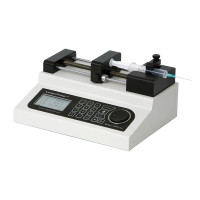
Syringe Pump Flow Rate Calculation
This digital syringe pump (dLSP500) is designed for precision fluid handling laboratory applications. It accepts syringe size from 0.5uL to 60mL. Let's consider the dLSP500 syringe pump to estimate the flow rate range. This pump has a linear translation speed range of 0.0833mm/min to 180mm/min, with a resolution of 0.03255µm/µstep. Table 1, 2, and 3 list commonly used syringe sizes and their inner diameters. The inner diameter of a 5 mL BD plastic syringe is approximately 11.98 mm. Using this information, we can calculate that the flow rate of the syringe pump ranges from 9.389 µL/min to 20.289 mL/min. The flow rates for other syringe sizes can be calculated in a similar manner. In addition, the average pressures for any syringe pump and syringe together can be estimated by dividing the average force applied on the syringe pump and the syringe surface area.
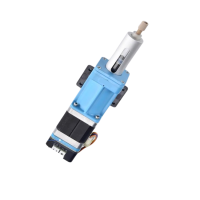
Industrial Syringe Pump Communication Command Examples (Hexagon Codes)
The ASP-SY0825 is a compact OEM industrial syringe pump module designed for precision liquid handling applications. This new syringe pump can communicate through RS-232, RS-485, or CAN interfaces, allowing for multi-pump arrangements of up to 15 pumps in one group. It supports group control and individual addressing, making it versatile for various automation needs. This pump is ideal for tasks such as auto pipetting, sample dilution or mixing, and sample dispensing in analytical instruments. It is available in three volume options: 5 mL, 12.5 mL, and 25 mL. If you have any questions or require more details, please don't hesitate to reach out to our product specialist.

Practical Fluidic Interface Guide for Electric Rotary Valves in Laboratory Automation
The electric rotary or multi-channel switching valve is a stepper motor-driven fluid handling valve designed for automated fluidics applications. This precise rotary valve automates the routing of fluidic volumes, allowing for the handling of aggressive fluids and switching flow directions as needed. For instance, in a multi-channel distribution valve, a common central port connects the stator and rotator, enabling the switching of flow direction between different ports with a rapid response time of less than 120ms for adjacent ports. This switching valve can communicate through RS-232, RS-485, or CAN interfaces, allowing for multi-valve arrangements of up to 15 valves in one group. See Figure 1 for the wiring instruction. It supports group control and individual addressing, making it versatile for various automation needs. The wetted materials in the flow path are PCTFE/Sapphire and can be customized upon request.
Related Products

McMillan IRIDIUM Series Liquid Flow Control Systems
Iridium is a platform for configurable flow control. It uses an integrated flow rat..
$4,199.00

McMillan COBALT Series Electromagnetic Flow Meter for Liquid Applications
McMillan Flow Products introduces the COBALT Series: Electromagnetic flow meters for use with conduc..
$755.00

McMillan OSMIUM Series Thermal Flow Switches for Liquid Applications
McMillan Flow Products introduces the OSMIUM Series, a highly robust thermal flow switch with a prec..
$580.00
Tags Sample Preparation, HPLC, Syringe Pump, Analytical Instrument, Flowmeter, Ultrasonic