
Syringe Pump Selection Guide
A syringe pump is a device that is used to accurately and precisely dispense small amounts of fluid over a period of time. It typically consists of a control unit that is connected to a motorized pump and a syringe. Syringe pumps work by using a motor to drive a plunger that pushes fluid out of a syringe. The control unit of the pump can be programmed to dispense a specific volume of fluid at a specific flow rate over a specified period of time. The motor moves the plunger at a consistent speed, ensuring that the desired volume of fluid is dispensed at the desired rate. Some syringe pumps also have the ability to reverse the direction of the plunger, allowing them to draw fluid back into the syringe. This feature can be useful for tasks such as flushing a line or emptying a syringe. Syringe pumps are highly accurate and precise, making them an essential tool in a variety of applications where small volumes of fluid need to be dispensed accurately and consistently. Therefore, syringe pumps can be used for a variety of purposes in pharmaceutical, chemical and biotech areas, such as:
- Dispensing small amounts of chemicals or liquids for use in laboratory or manufacturing processes
- Injecting additives or catalysts into a process stream
- Dispensing precise amounts of lubricants or adhesives
- Delivering fluids to cells or tissues in research and development
- Dispensing medications or fluids to patients in a hospital or clinical setting
What's the difference between laboratory syringe pump and industrial syringe pump?
One of the main differences is the intended use and environment. Industrial syringe pumps are designed for use in manufacturing or process control environments and are typically more durable and rugged, able to withstand harsh conditions such as vibration, dust, and extreme temperatures. They are also generally more accurate and precise than lab syringe pumps, with higher resolution and repeatability.
Lab syringe pumps, on the other hand, are typically used in research and laboratory settings and are designed for more precise, controlled delivery of small volumes of fluids. They may be used in a variety of applications, such as chemical analysis, drug delivery, and sample preparation. Lab syringe pumps are usually smaller, more portable, and easier to use than industrial syringe pumps. They may also have additional features such as programmable flow rates and the ability to connect to a computer for data analysis.
Another difference is the size of the syringes that can be used. Industrial syringe pumps are usually able to accommodate larger syringes (e.g., 50 mL or more) while lab syringe pumps are designed for smaller syringes (e.g., less than 50 mL). Additionally, the industrial syringe pumps usually communicate with RS232, RS485 or CAN whereas the laboratory syringe pumps are standalone and easy to operate on the pump panel.
When selecting a syringe pump, there are several factors to consider:
- Flow rate: The flow rate of the pump should be appropriate for the volume and viscosity of the fluid being dispensed.
- Syringe size: The syringe size should be compatible with the volume of fluid being dispensed.
- Accuracy and precision: It is important to select a pump that is capable of delivering the desired volume of fluid with a high degree of accuracy and precision.
- Control options: Consider whether you need a pump with manual or automatic control, and whether it offers programmable flow rates and other advanced features.
- Compatibility with the fluid being dispensed: Some syringe pumps are designed to handle certain types of fluids, such as liquids or gases, while others are more versatile.
- Compatibility with other equipment: If the syringe pump will be used in conjunction with other equipment, it is important to ensure that it is compatible.
- Durability and reliability: Choose a pump that is built to last and has a proven track record of reliability.
- Ease of use: Select a pump that is easy to set up and operate, with clear instructions and user-friendly controls.
- Price: Consider your budget when choosing a syringe pump, but also keep in mind that high-quality pumps may be worth the investment in the long run.
Tips for using a syringe pump:
- Follow the manufacturer's instructions for setting up and operating the pump.
- Regularly check the pump's performance to ensure it is delivering fluids at the desired flow rate and volume.
- Keep the pump clean and free of debris to prevent clogs and other issues.
- Use the appropriate syringe size and type for your application.
- Use the pump in a controlled environment to prevent accidental spills or other mishaps.
- Handle the pump and syringe carefully to avoid damaging the equipment or causing injury to yourself or others.
- Regularly check and replace any worn or damaged parts to maintain the pump's performance and safety.
Please feel free to contact us for any syringe pump questions for your specific applications at sales at auroraprosci dot com.

Related Articles
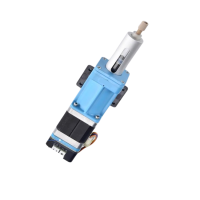
Industrial Syringe Pump Communication Command Examples (Hexagon Codes)
The ASP-SY0825 is a compact OEM industrial syringe pump module designed for precision liquid handling applications. This new syringe pump can communicate through RS-232, RS-485, or CAN interfaces, allowing for multi-pump arrangements of up to 15 pumps in one group. It supports group control and individual addressing, making it versatile for various automation needs. This pump is ideal for tasks such as auto pipetting, sample dilution or mixing, and sample dispensing in analytical instruments. It is available in three volume options: 5 mL, 12.5 mL, and 25 mL. If you have any questions or require more details, please don't hesitate to reach out to our product specialist.

Syringe Replacement Procedure for Efficient Fluid Handling in Pump Systems
The ASP-SY0360 is a compact OEM industrial syringe pump module designed for precision liquid handling applications. This syringe pump can communicate through RS-232, RS-485, or CAN interfaces, allowing for multi-pump arrangements of up to 15 pumps in one group. It supports group control and individual addressing, making it versatile for various automation needs. This pump is ideal for tasks such as auto pipetting, sample dilution or mixing, and sample dispensing in analytical instruments. Industrial syringe pumps find wide application in analytical instruments.

Industrial Syringe Pump Basics: Accuracy/Precision, Resolution and Flow Rate Calculation
The resolution of industrial syringe pumps refers to the smallest increment of movement or volume that the pump can achieve. It is typically specified by the manufacturer and is important for applications requiring precise control over fluid delivery. To calculate the resolution of a syringe pump, you need to know the steps per revolution of the motor (if it's a stepper motor-driven pump) or the linear resolution of the pump mechanism. The linear resolution is usually given in units of distance per step (e.g., mm/step or µm/step). In this article, the basics of typical industrial syringe pumps, namely, the accuracy and precision, resolution and flow rate calculation (stepper motor driven), are briefly reviewed.

Programmable Syringe Pump Application Notes
The dLSP 501W programmable syringe pump stands out as a powerful tool for laboratories and industries that demand precision, reliability, and ease of use. Its comprehensive features and flexible operation modes ensure that researchers can achieve their experimental goals with confidence and accuracy. Whether optimizing chemical reactions, developing cutting-edge microfluidic systems, or advancing medical research, the dLSP 501W is the perfect partner for success. Explore the future of precision fluid handling with this revolutionary syringe pump. Here are the highlights of this innovative device:

Aurora Pro Scientific: Precision Fluid Handling Solutions
Aurora Pro Scientific provides innovative syringe and piston pumps designed for precision fluid handling in laboratory and industrial settings. Our offerings include programmable syringe pumps with touchscreen controls and customizable infusion/withdrawal modes, compact OEM syringe pumps for specialized integration, high-volume piston pumps with solenoid valves for automation, and fixed-volume syringe pumps with integrated glass syringes for accurate dosing. They also feature multi-channel syringe pumps for synchronized, parallel fluid handling, enhancing efficiency and adaptability in diagnostics, research, and automation.
Related Products

Syringe Pump Programmable, Flow Rate 0.138 µL/min - 52.94 mL/min, Infusion/Withdrawal, TJP-3A/W0109-1B
This programmable syringe pump (TJP-3A/W0109-1B) is a single channel micro-syringe pump has infusi..
$2,504.20

Electrical Rotary Valve, 16 Ports, Orifice size 1.0 mm, Max. Pressure 1.5 MPa
Electric rotary or selector valve is a stepper motor driven fluid handling valve designed for fluid ..
$1,506.25
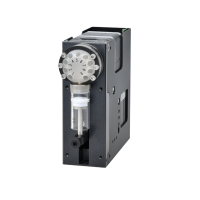
Industrial Syringe Pump ASP-SY01 Integrated with Electrical Rotary Valve, Max Stroke 30 mm
ASP-SY-01 is a compact OEM pump module designed to handle precision liquid handling application. The..
$0.00
Tags Sample Preparation, Drug Delivery, Reagent Injection, Cell Culture, Point-of-care testing (POCT), In vitro diagnostics (IVD), Syringe Pump